

Dainese has revealed the Smart GO, an ultra-lightweight electronic motorcycle airbag designed to make everyday airbag protection simpler, less bulky and considerably more affordable.
At just 780 g including the gas generator, Dainese describes it as the lightest motorcycle airbag it has produced. The system provides certified Level 2 protection across the chest and back, requires no physical connection to the motorcycle and carries a European price of €349 with no subscription.
That combination matters. Motorcycle airbags have developed rapidly, but price, weight and the inconvenience of wearing another substantial layer have kept many everyday riders away. Smart GO is Dainese’s attempt to remove those barriers without reducing the protection standard that matters most.
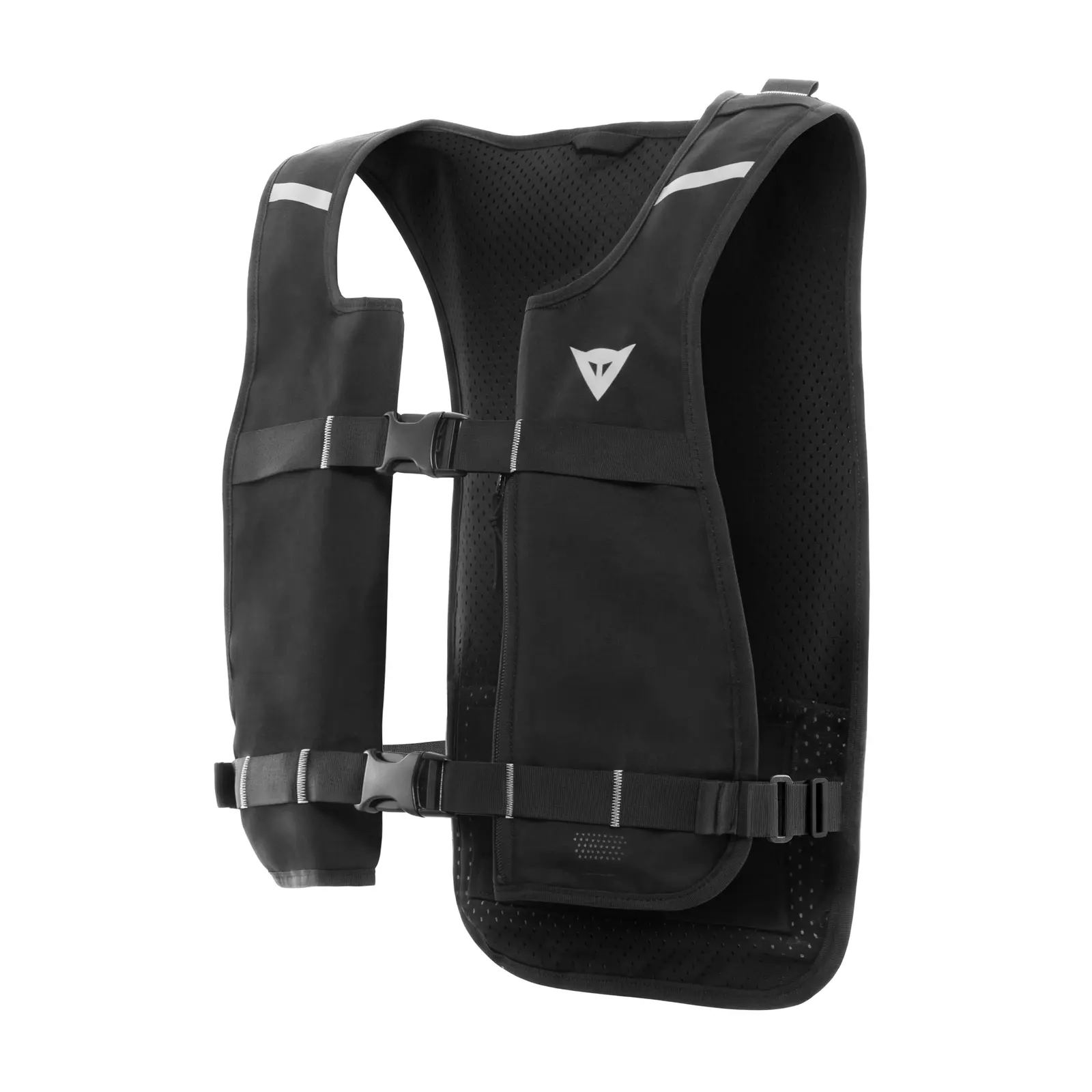
A motorcycle airbag weighing only 780 g
The headline figure is the weight. Smart GO weighs 780 g with its gas generator installed, making it substantially lighter than many existing electronic airbag vests.
Its slim, foldable construction allows it to be worn over or beneath technical riding gear or ordinary clothing. Dainese uses a one-size, unisex design with an adjustable waist and configurable front sections, allowing the vest to accommodate different body shapes and layers.
The front sections can also be folded inwards and held magnetically to increase airflow in warm conditions. That could be particularly useful in South Africa, where the heat and bulk of protective equipment often become just as important as its performance on paper.
Dainese says Smart GO is intended for commuting, road touring, scooters and light gravel use. Once the ride is finished, its compact construction should make it easier to store beneath a scooter seat, inside motorcycle luggage or in a backpack.
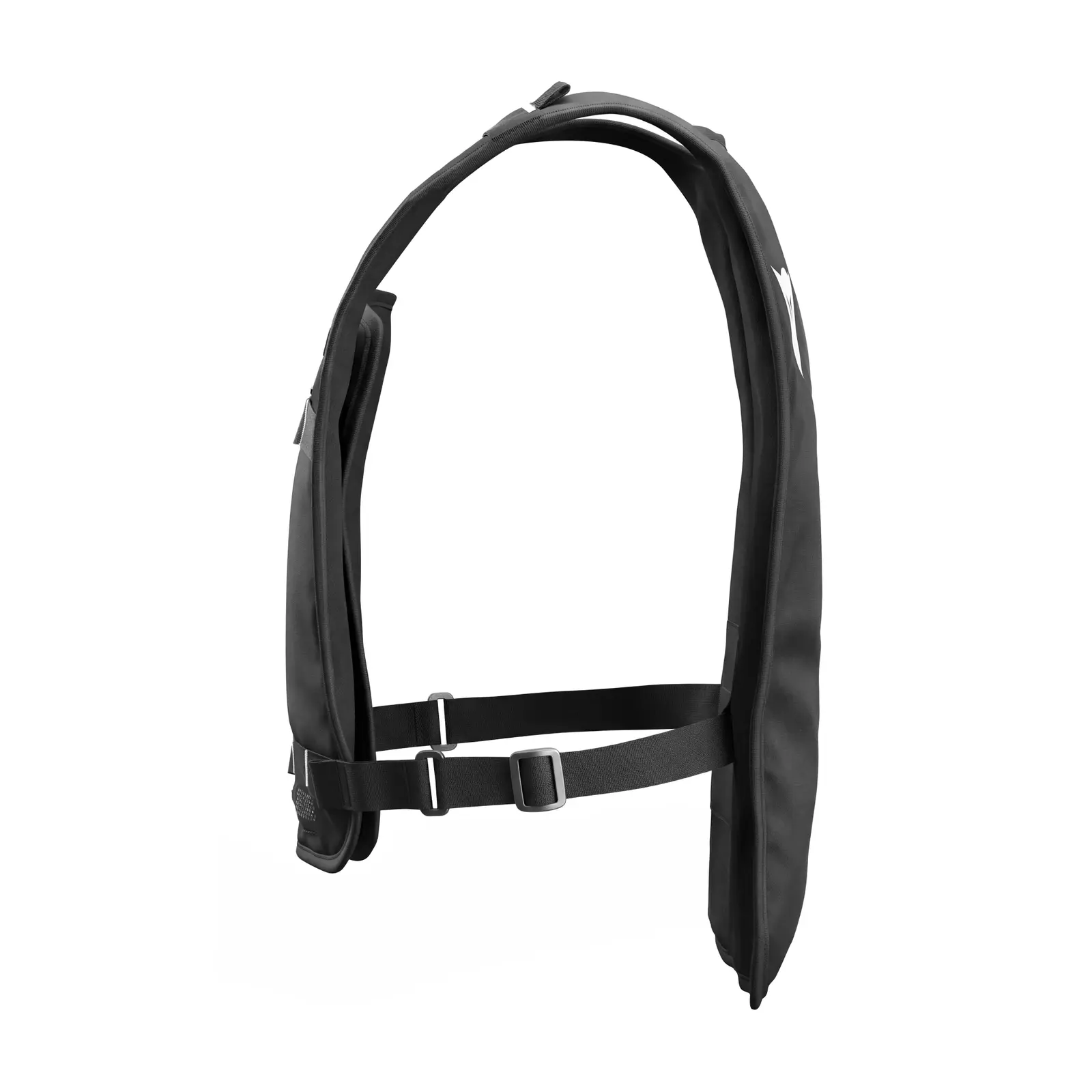
Level 2 protection for chest and back
Despite the low weight, Smart GO provides certified Level 2 airbag protection across both the chest and back—the highest protection level defined for this type of system.
The airbag uses Dainese’s patented Diaframma construction. Its layered internal structure controls expansion and helps the inflated airbag retain its shape during an impact. Dainese calls the resulting structural stiffening the Dynamic Arch Effect, intended to distribute protection evenly across the covered area.
The vest incorporates an accelerometer and gyroscope, while the connected smartphone supplies GPS data. This information is processed by Dainese’s road-focused D-air algorithm, which monitors riding conditions and recognises the accident dynamics for which the system has been developed.
There is no tether and no installation on the motorcycle. Once registered and enabled through the Dainese D-air app, the system arms when it detects vehicle vibration or a speed above 10 km/h.
That detail is worth noting for electric-motorcycle riders. Dainese says Smart GO can be used with electric motorcycles, but protection is not guaranteed below 10 km/h if the motorcycle is not producing detectable vibration.
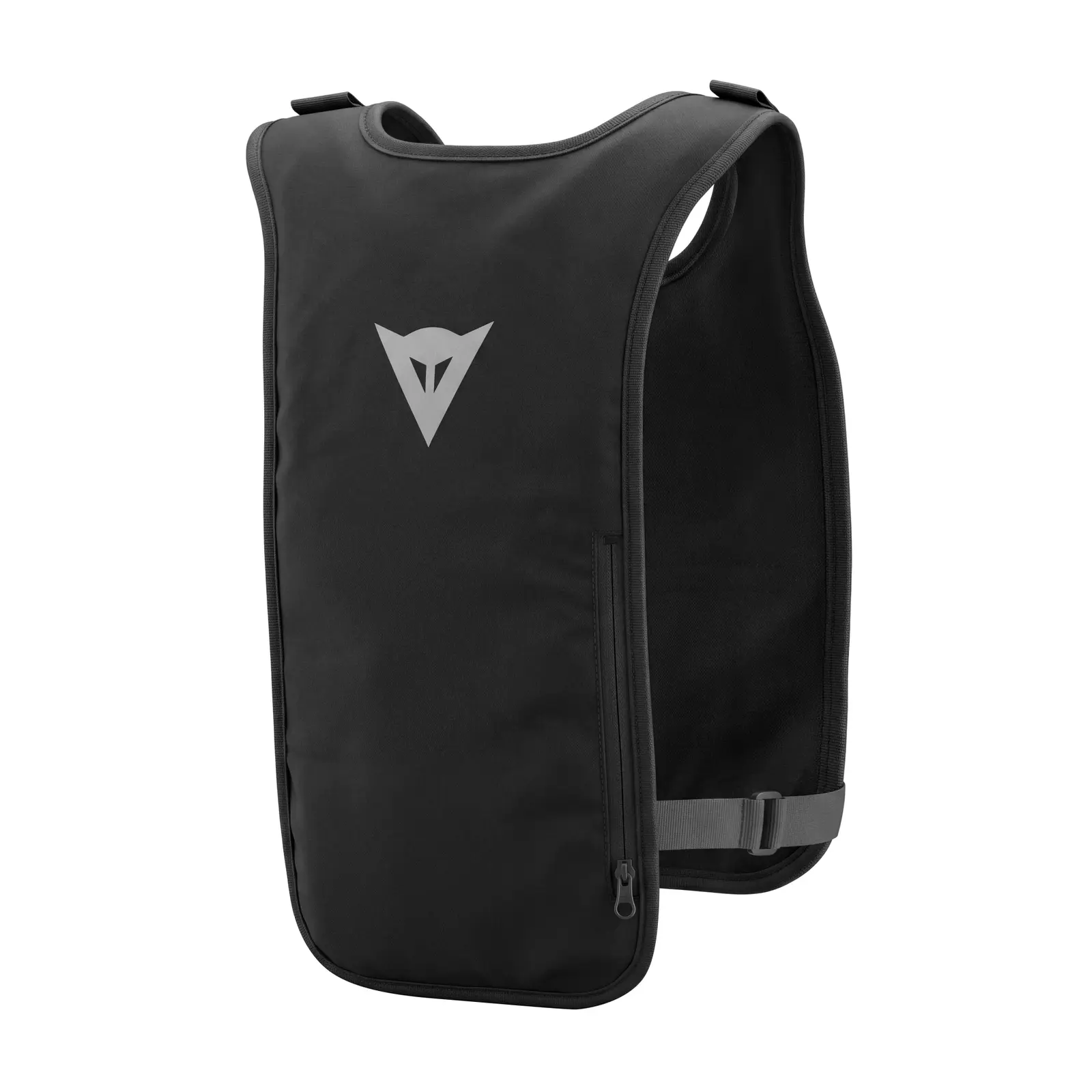
Powered by your phone—or a dedicated power bank
Smart GO does not contain a conventional rechargeable battery. Instead, it runs from an external power source connected through its integrated USB-C cable.
Riders can use a USB-C smartphone supporting USB On-The-Go technology, or purchase Dainese’s dedicated Smart GO Powerbank. The optional power bank costs €39 and provides up to 72 hours of operation.
The D-air app is used to register and enable the system, check its condition, receive notifications and install firmware updates. A coloured LED on the USB-C cable indicates whether the vest is enabled and armed.
Using a phone as the power source reduces the weight built into the vest, but it introduces another consideration: riders must ensure their phone is compatible, sufficiently charged and correctly connected. For longer trips, the dedicated power bank appears to be the more practical arrangement.
Up to three activations
Smart GO supports up to three deployments, provided the vest remains undamaged. After an activation or fall, the rider must inspect the system and perform the prescribed airbag-integrity test before returning it to service.
If the vest passes that test, the compact CO₂ gas-generator kit can be replaced by the owner according to Dainese’s instructions. The replacement generator is listed at €69.
User replacement should reduce downtime and inconvenience compared with systems that must be returned to an authorised centre after every deployment. However, it does not mean the vest can simply be reloaded after any crash. Tears, abrasions, cuts or pressure loss still require professional assessment.
An optional 15-litre backpack
Dainese has also developed a dedicated 15-litre Smart GO Backpack, priced at €129. It connects to the vest using magnetic clips and includes compartments for a laptop, tablet and personal items.
The backpack is specifically designed to work without compromising the airbag’s deployment. Dainese says the use of other, unapproved backpacks with Smart GO has not been evaluated, so riders should not assume that any ordinary backpack will be safe over the vest.
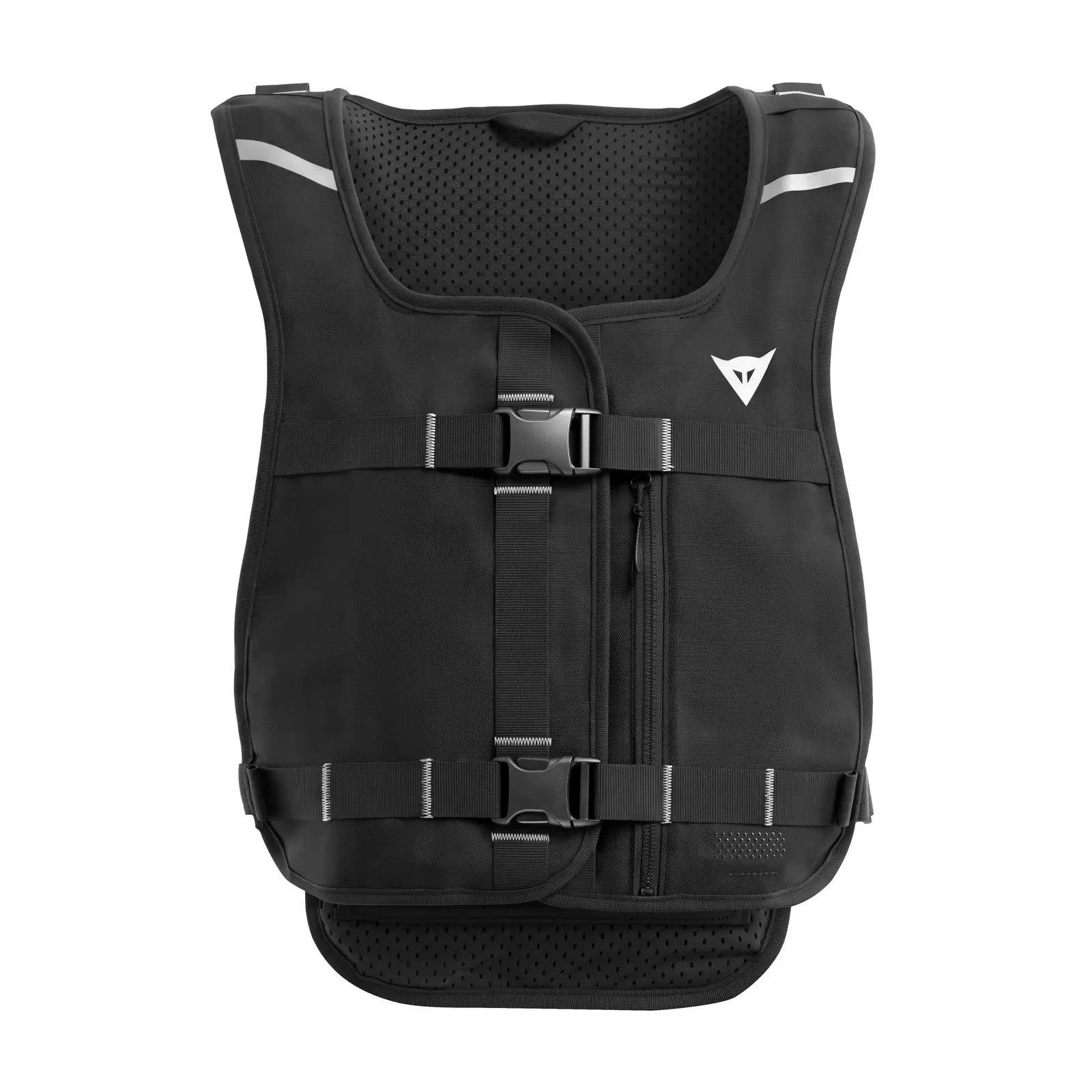
Could this make airbags mainstream?
At €349 without a subscription, Smart GO sits far closer to premium conventional body armour than many established electronic airbag systems. That could be its most important achievement.
Airbag protection is no longer restricted to racers or riders willing to tolerate a heavy, expensive vest. A system that is light enough for commuting, compact enough to store easily and affordable enough to consider alongside a quality jacket could bring the technology to a much broader group.
There are compromises. It depends on an external power source, requires a compatible smartphone and app for setup, and protects the chest and back rather than every vulnerable area of the upper body. Buyers will also need to account for the cost of the power bank and replacement gas generators.
South African pricing and availability have not yet been confirmed. Based on the €349 European price, it would be premature to calculate a direct rand figure because local tax, shipping and distributor margins could change the final number considerably.
Torque & Throttle Take
Smart GO may not be the most comprehensive airbag Dainese has ever produced, but that is not its purpose.
Its strength lies in making meaningful protection easier to wear every day. The 780 g weight, Level 2 chest-and-back certification, no-subscription price and owner-replaceable gas generator address four of the biggest objections riders have had to electronic airbag systems.
The external-power arrangement will not suit everyone, and we would want to see confirmed South African support and replacement-generator availability before recommending it locally. Even so, Smart GO feels like an important step towards motorcycle airbags becoming normal riding equipment rather than an expensive specialist accessory.
Image credit: Dainese
Sources:
