
By Tiaan Janse van Rensburg | The Rev Report
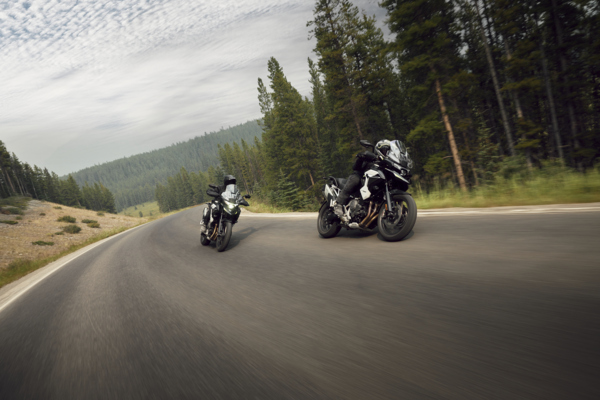
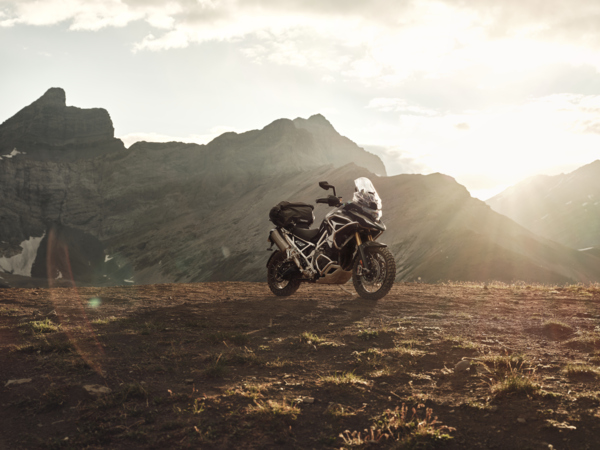
Triumph has revealed the 2027 Tiger 1200, bringing more power, self-lowering suspension, radar assistance and smartphone integration to its flagship adventure motorcycle.
However, the biggest talking point sits beneath the front mudguard.
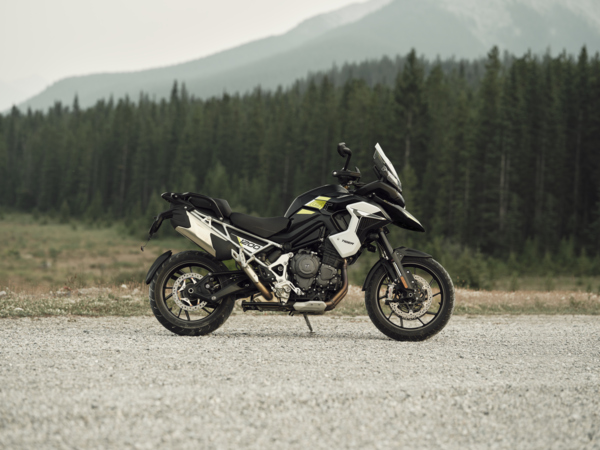
Every model now uses a 19-inch front wheel, including the Rally Pro and Rally Explorer. Combined with a shared 17-inch rear wheel and 200 mm of suspension travel, the change signals a clearer emphasis on road handling and long-distance touring.
The new Tiger therefore arrives with an interesting proposition: make a large adventure motorcycle more sophisticated while improving its accessibility in everyday riding.
For South African riders covering highways, mountain passes and gravel roads on the same trip, that could be a compelling combination. Whether dedicated off-road enthusiasts welcome the new direction is another question.
More power from the T-Plane triple
The 1,160 cc three-cylinder engine remains central to the Tiger’s identity.
For 2027, Triumph claims 155.8 hp at 9,250 rpm, rounded here to 156 hp, and 130 Nm at 6,750 rpm. Some launch coverage uses the figure of 158, but that is metric horsepower—PS—rather than mechanical horsepower.
The engine receives a redesigned cylinder head, new pistons, lighter valves, revised injection and a freer-flowing exhaust. Changes to the first three gear ratios accompany Triumph’s work on low-speed response and refinement.
Our interest extends beyond the extra peak power.
A flagship adventure bike must pull away cleanly with a passenger, negotiate traffic and remain predictable when a gravel-road turn becomes tighter than expected. Those situations ask more of throttle calibration and gearing than headline horsepower.
We will need to ride the new Tiger before judging the result. If Triumph has improved that connection between throttle and rear wheel, the benefit could be felt considerably more often than the additional top-end performance.
The Rally loses its 21-inch front wheel
Previous Tiger 1200 Rally models used a 21-inch front and 18-inch rear wheel, with 220 mm of suspension travel. Triumph explicitly connected that arrangement to greater off-road capability.
The 2027 range takes another direction.
Both GT and Rally versions now share 19-inch front and 17-inch rear wheel dimensions. GT models retain cast wheels, while Rally versions use tubeless spokes.
That makes the Rally badge a different proposition.
A smaller front wheel should favour steering response on tar, while the shared wheel dimensions reduce the distinction between the road and off-road branches of the range.
This does not make the Rally unsuitable for gravel. Tyres, suspension control, geometry and rider confidence all influence capability.
However, riders who deliberately chose the previous Rally for its larger front wheel have a legitimate reason to question the change.
Our interpretation is that Triumph wants its flagship to excel as a substantial touring motorcycle, while retaining the versatility needed for mixed-surface travel.
Suspension that lowers the bike for you
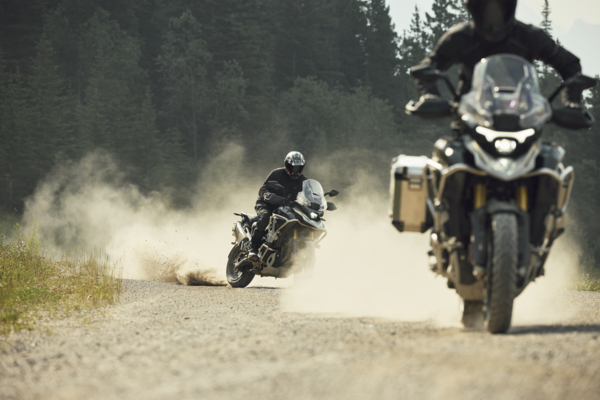
The new SHOWA EERA HEIGHTFLEX suspension introduces automatic lowering as the motorcycle comes to a stop.
Triumph claims a 30 mm reduction, alongside selectable damping settings and Centre Stand Assist, which helps reduce the effort required to lift the motorcycle onto its stand.
For shorter riders, that could be more valuable than the power increase.
Large adventure motorcycles often feel manageable once moving. The difficult moments arrive at sloping junctions, uneven parking areas and fuel stops with luggage and a passenger aboard.
There is an important qualification to the advertised 790 mm minimum seat height: it requires the low seat, its lowest position and active lowering.
The standard seat is listed at 840 or 860 mm, reducing to 810 or 830 mm with lowering active. Automatic lowering operates in road modes; off-road modes use selectable height settings.
We would want to assess how naturally the system transitions between heights, particularly during repeated stops and slow manoeuvres.
Radar and smartphone integration
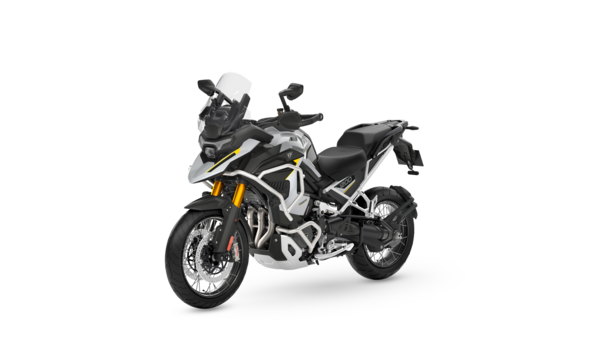
Front and rear Bosch radar extend the Tiger’s electronic assistance, while a new seven-inch HD touchscreen introduces Apple CarPlay and Android Auto. A cooled phone compartment with USB-C charging supports the connected package.
The appeal for touring is clear.
Long journeys involve changing traffic speeds, overtaking and monitoring vehicles approaching from behind. Useful assistance can reduce some of that workload, provided its behaviour remains smooth and predictable.
Likewise, familiar navigation software could simplify daily use. Screen visibility, reliable connectivity and straightforward controls will matter more than how impressive the display looks in a studio photograph.
The cooled phone compartment also deserves testing in South African summer conditions. Navigation and charging can generate considerable heat, making effective temperature management a practical benefit.
Four models, two fuel-tank choices
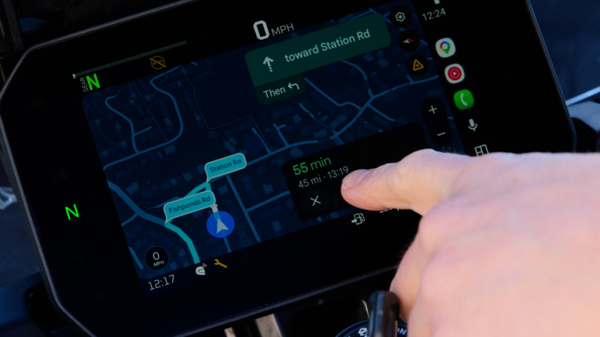
The range comprises GT Pro, Rally Pro, GT Explorer and Rally Explorer.
Pro models retain 20-litre fuel tanks, while Explorers carry 30 litres. Shaft drive remains, alongside a stated 16,000 km service interval.
The fuel-tank decision should follow the intended journey.
A larger tank provides reassurance when filling stations are widely spaced, but not every owner needs that capacity. Riders with reliable access to fuel may prefer the smaller-tank versions.
The same principle applies to GT versus Rally: choose according to how often the motorcycle will encounter rough surfaces and what equipment is useful for those journeys.
How heavy is it compared with BMW’s GS?
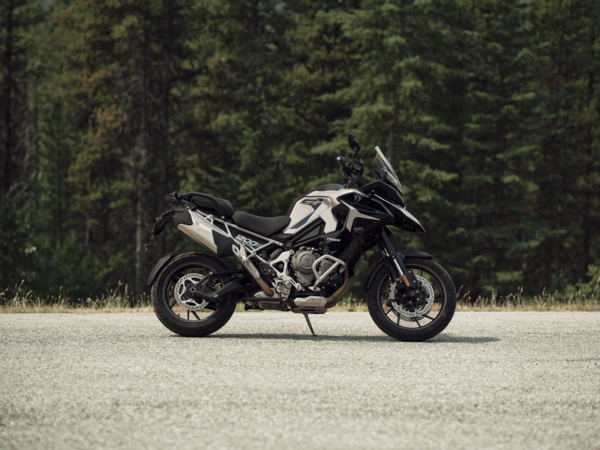
The new technology has not turned the Tiger 1200 into a lightweight motorcycle.
Triumph lists claimed wet weights ranging from 250 kg for the GT Pro to 268 kg for the Rally Explorer.
The most useful BMW comparisons are the standard R1300GS for the 20-litre Tigers and the R1300GS Adventure for the 30-litre Explorers.
| Triumph model | Claimed wet weight | Fuel tank | Comparable BMW | BMW claimed weight | Tiger’s difference |
|---|---|---|---|---|---|
| Tiger 1200 GT Pro | 250 kg | 20 litres | R1300GS | 237 kg | 13 kg heavier |
| Tiger 1200 Rally Pro | 255 kg | 20 litres | R1300GS with off-road equipment | 237 kg* | 18 kg heavier* |
| Tiger 1200 GT Explorer | 260 kg | 30 litres | R1300GS Adventure | 269 kg | 9 kg lighter |
| Tiger 1200 Rally Explorer | 268 kg | 30 litres | R1300GS Adventure | 269 kg | 1 kg lighter |
BMW’s figures are standard-equipment reference weights, not separately verified weights for Trophy, Option 719 or motorcycles fitted with additional packages. BMW specifies operating fluids and at least 90% fuel. Triumph’s retrieved launch specification labels its figures “wet weight” without clarifying the fuel percentage. These are manufacturer-claimed comparisons, not a matched weigh-in.
The GT Pro is the closest road-touring alternative to the standard GS. Its 13 kg disadvantage deserves acknowledgement, although equipment differences must also be considered.
The Rally Pro is the more natural comparison for a GS configured with spoked wheels and off-road protection. However, subtracting BMW’s base weight does not establish the difference between equally equipped motorcycles.
The Explorers provide a cleaner fuel-capacity comparison because both match the GS Adventure’s 30-litre tank.
The GT Explorer’s claimed nine-kilogram advantage is meaningful on paper. The Rally Explorer’s one-kilogram advantage is effectively parity, particularly once equipment differences enter the calculation.
Weight distribution, seat width and suspension height will determine how manageable these motorcycles feel during tight turns and uneven stops.
More horsepower, less peak torque than BMW
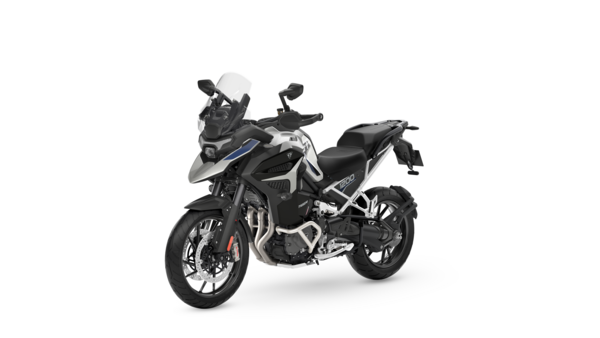
Using mechanical horsepower consistently, Triumph’s 155.8 hp compares with approximately 143.5 hp from BMW’s boxer.
The Tiger therefore has approximately 12.3 hp more peak power, while BMW’s 149 Nm gives it 19 Nm more peak torque.
That suggests different engine characters, rather than proving which motorcycle accelerates faster.
Gearing, power delivery, traction and load will determine the result on the road. Triumph’s triple promises a different experience from BMW’s boxer, and a back-to-back test will tell us considerably more than peak figures alone.
Comfort, pricing and South Africa
Triumph has revised the bodywork and seats, with thicker seat foam, heated rider and passenger seats and heated grips across the range.
Comfort will still require proper testing. Seat shape, wind protection and the relationship between the handlebars, seat and foot pegs matter more over several hours than a list of equipment.
UK starting prices are £18,295 for the GT Pro, £18,995 for the Rally Pro, £19,875 for the GT Explorer and £20,575 for the Rally Explorer, with dealership arrivals from December 2026. These are UK figures.
We have not verified South African pricing, allocation or arrival dates for the new range. Local pricing will be crucial when assessing its value against an equivalently equipped GS.
Torque & Throttle Take
The most interesting part of this reveal is Triumph’s apparent change in priorities.
More power is welcome, but easier stopping, better connectivity and a clearer touring focus may have a greater effect on everyday enjoyment.
The weight comparison adds useful context. The Pro models face a lighter standard GS, while the Explorers sit much closer to the GS Adventure.
The 19-inch Rally front wheel will divide opinion. Riders seeking a more dedicated off-road flagship may see a compromise; those spending most of their time on tar may welcome the balance.
Our verdict must wait for a ride.
Does the engine feel smoother? Does the lowering system build confidence? Does the revised chassis improve the riding most owners actually do?
If Triumph gets those details right, the 2027 Tiger 1200 could become a more convincing long-distance companion—even if its definition of adventure has changed.
Sources
- Triumph — Official 2027 Tiger 1200 launch announcement
- Triumph — 2027 Tiger 1200 specifications and media
- Triumph UK — New Tiger 1200 range comparison
- Triumph South Africa — Previous-generation Tiger 1200 technical explanation
- BMW South Africa — R1300GS technical data
- BMW South Africa — R1300GS Adventure technical data
