
Honda’s E-Clutch promises automatic-clutch convenience without taking the gear lever—or the clutch lever—away from the rider. After living with the NX500, we think that distinction matters.
Motorcycle manufacturers are rapidly finding new ways to remove the effort from changing gears.
Honda has DCT and E-Clutch. BMW has ASA. Yamaha has Y-AMT. Even systems such as BMW’s Easy Ride Clutch are changing how riders think about one of the most familiar controls on a motorcycle.
The obvious question is whether these systems make motorcycles more accessible—or remove too much of the experience that attracted us to riding in the first place.
The 2026 Honda NX500 E-Clutch provides an interesting answer because it does not replace the six-speed gearbox, the gear lever or even the manual clutch lever. It simply operates the clutch electronically whenever the rider wants it to.
After using the motorcycle for commuting, highway riding, gravel and our Torque & Throttle Performance Index, the E-Clutch feels less like an automatic transmission and more like an extra tool.
What exactly does Honda E-Clutch do?
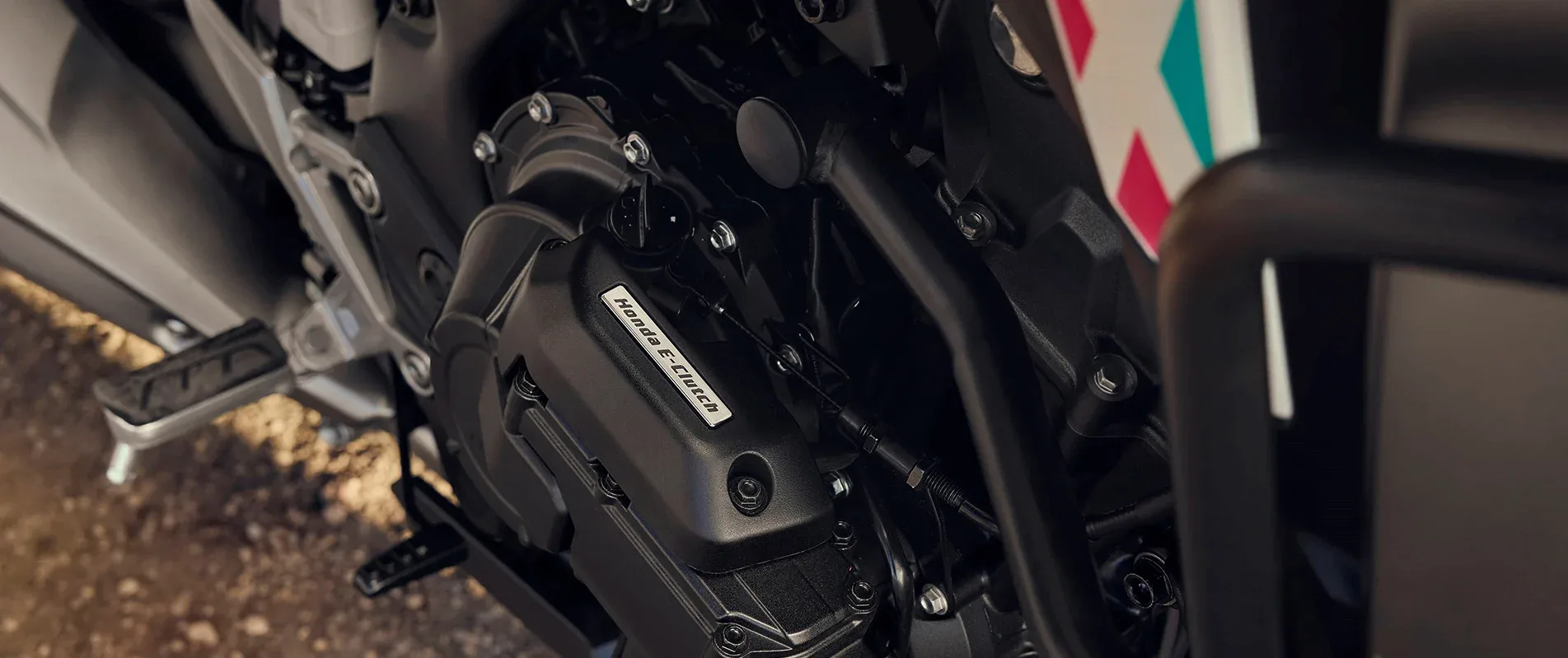
Honda E-Clutch automatically controls clutch engagement during pull-away, stopping and gear changes. The rider still selects every gear with the conventional foot lever.
Select first gear, open the throttle and the motorcycle pulls away without the rider touching the clutch. Shift up or down using the gear lever and the system electronically slips the clutch to make the change. Come to a stop while still in gear and the engine will remain running.
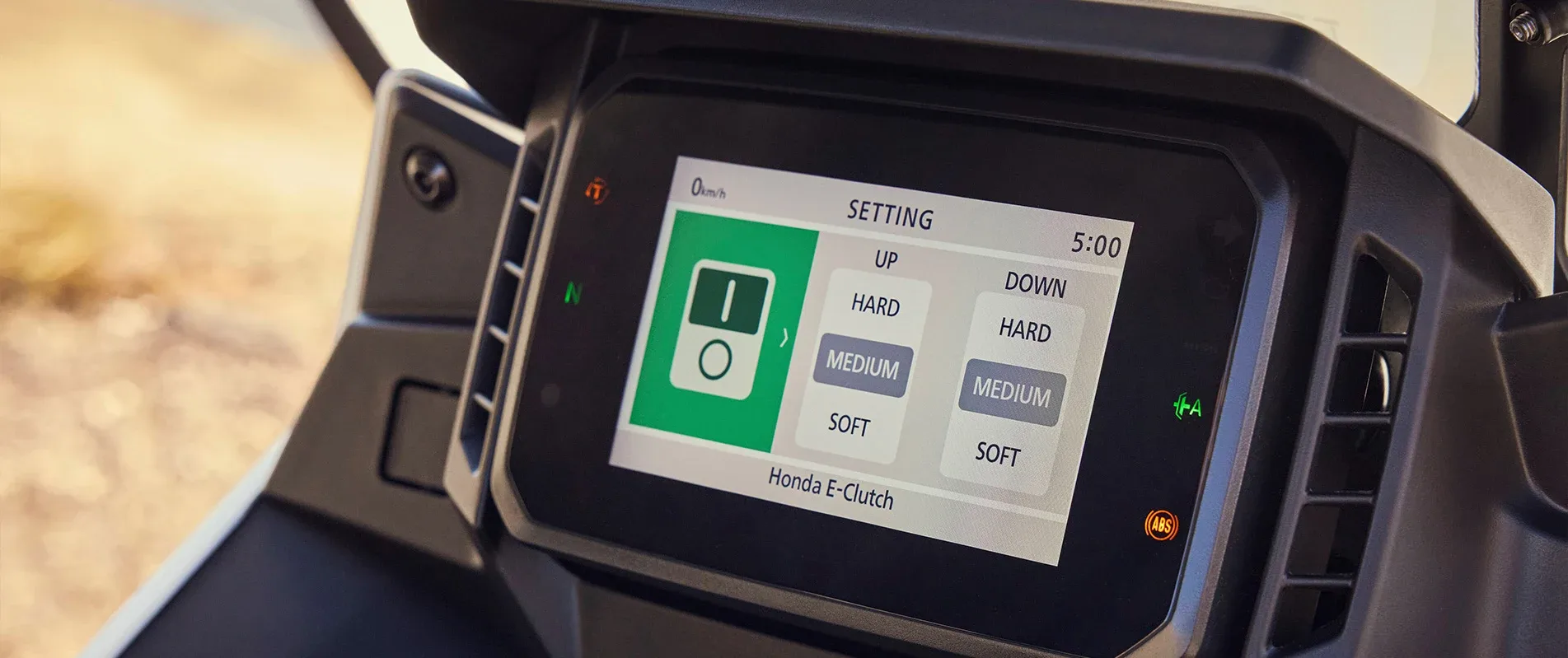
The manual clutch lever has not disappeared. Pull it at any time and manual control immediately overrides the electronics. The rider can also switch the system off through the TFT display and adjust upshift and downshift feel through Soft, Medium and Hard settings.
That makes E-Clutch fundamentally different from Honda’s DCT, BMW’s ASA and Yamaha’s Y-AMT. Those systems can change gears automatically. E-Clutch only manages the clutch; choosing when to shift remains the rider’s responsibility.
That is why it preserves more of the traditional riding experience than the word “automatic” might suggest.
Smooth where a normal quickshifter struggles
Many conventional quickshifters work best when the engine is under load and the revs are relatively high. They can feel abrupt in slow traffic and may refuse a low-rpm change altogether.
The NX500 E-Clutch remained impressively smooth when shifting through town, including changes below 2,000 rpm. From third gear upward, the change often required little more than a light touch of the foot.
In stop-start traffic, there is no repeated squeezing of the clutch lever. At a red light, the rider can leave the motorcycle in gear and simply accelerate when traffic moves. That reduces fatigue without removing control over which gear is selected.
There is one important detail: manually pulling the clutch lever overrides E-Clutch. Release it badly at a standstill and the motorcycle can still stall. The technology assists the rider, but it cannot prevent every mistake.
Familiar 471 cc twin still punches above its size
The NX500 uses Honda’s proven 471 cc liquid-cooled parallel-twin engine, producing 35 kW—approximately 47 hp—at 8,600 rpm and 43 Nm at 6,500 rpm.
Those numbers sound modest, but the engine is smoother and more willing than its capacity suggests. It revs easily, responds cleanly from low speed and offers enough acceleration for commuting, overtaking, highway riding and an entertaining winding road.
The E-Clutch complements the engine particularly well. Because it can make fast, consistent changes without closing the throttle and coordinating a clutch lever, it helps the rider extract more from the 47 hp available.
More crossover than hard-core adventure bike
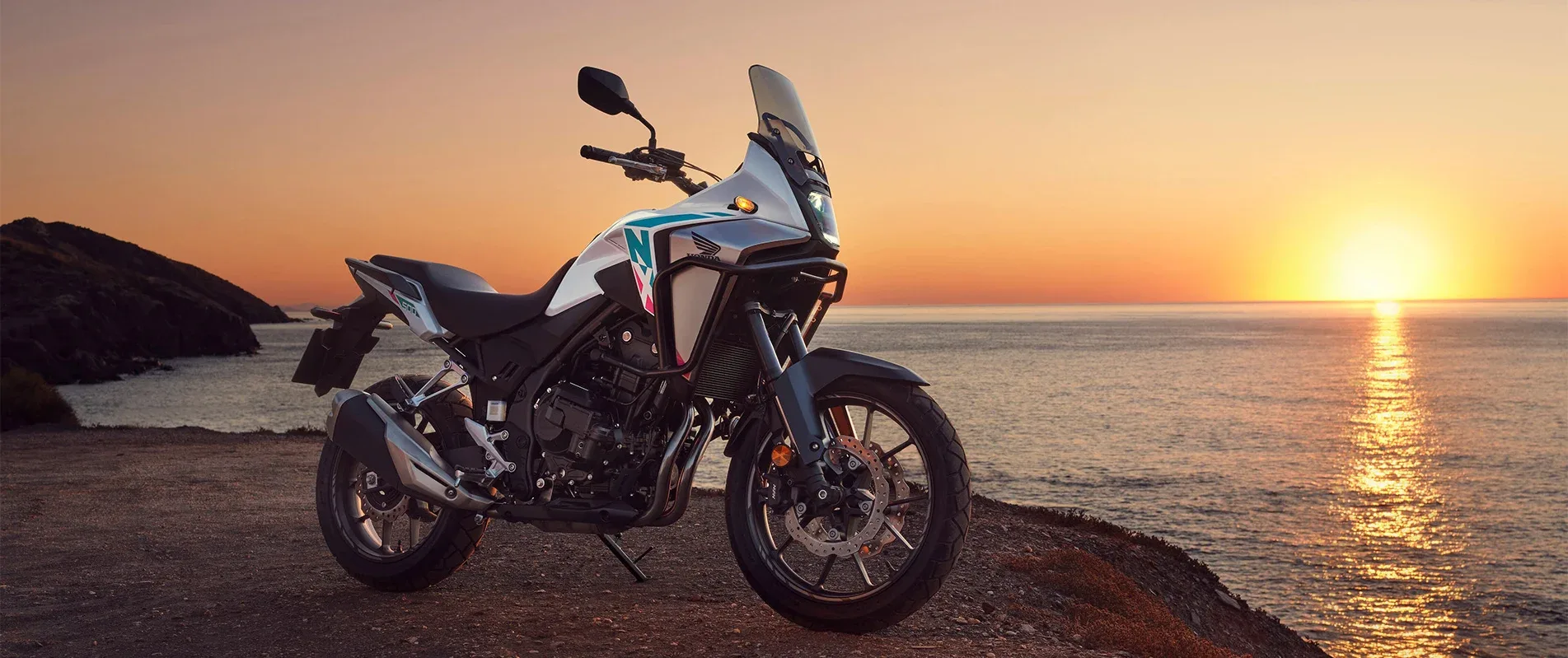
The NX500 follows a familiar road-biased adventure formula.
It uses a 19-inch front and 17-inch rear wheel, both cast aluminium. Suspension consists of 41 mm Showa upside-down forks and a Pro-Link rear shock with five-stage preload adjustment. Ground clearance is 180 mm, while the seat height is an approachable 830 mm.
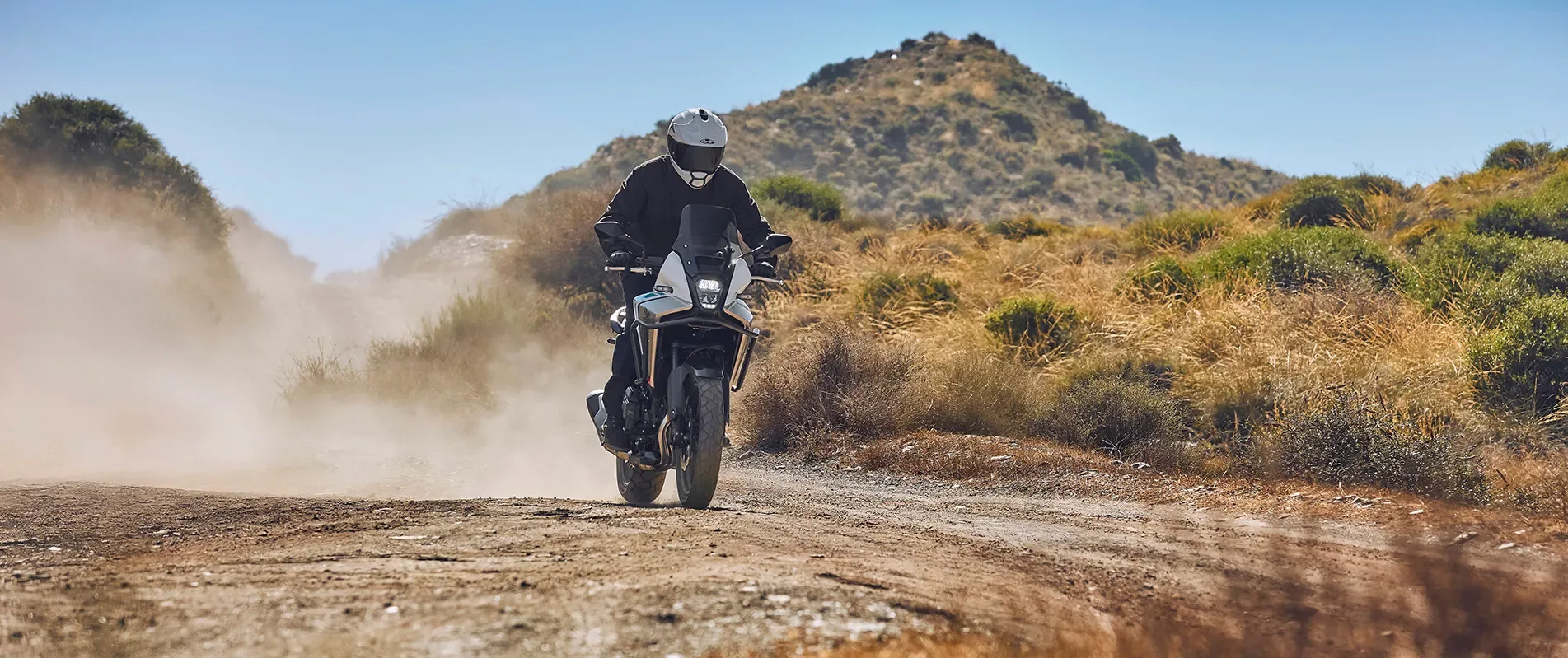
That combination makes the motorcycle confident on tar and capable on maintained gravel, but it is not designed to compete with a rally-style adventure bike on technical terrain.
The cast wheels, limited suspension adjustment and absence of a standard sump guard show where Honda expects most owners to ride. For rocky routes, we would want more engine protection, wider foot pegs and possibly handlebar risers.
On the road, the chassis works extremely well. The NX500 tips into corners easily, holds a line confidently and feels stable without becoming heavy or slow to steer. The suspension is comfortable on tar, although it can feel firm on rough gravel.
Strong brakes and easy low-speed control
Braking is handled by twin 296 mm front discs with two-piston Nissin calipers and a 240 mm rear disc, supported by two-channel ABS.
The front brake provides a reassuring initial bite and remains easy to modulate as pressure increases. During our emergency braking test, E-Clutch created another small advantage: the rider could concentrate entirely on braking without worrying about pulling the clutch lever or stalling the engine.
The narrow seat and tank make the 830 mm seat height more accessible than the number suggests. At 1.78 metres, our rider could place both feet flat on the ground.
Comfort and technology
The riding position is upright and natural, while the comfortable seat narrows toward the front to help shorter riders reach the ground.
The windscreen is not adjustable, but it performed better than expected. It kept most wind pressure off the rider’s chest and directed airflow over the helmet without creating excessive buffeting.
A five-inch colour TFT provides Honda RoadSync connectivity and houses the E-Clutch settings. Full LED lighting is standard, and the front indicators double as running lights.
The motorcycle carries 17.5 litres of fuel. Honda claims approximately 3.6 litres per 100 km, theoretically placing range beyond 480 km. Our harder test riding returned roughly 4.4 litres per 100 km, which remains excellent and still gives the NX500 meaningful touring ability.
Torque & Throttle Performance Index result
We put the NX500 E-Clutch through the five-part Torque & Throttle Performance Index: 60–120 km/h in third gear, the handling course, 80–140 km/h in sixth, braking from 100 km/h and 0–100 km/h acceleration.
It completed the combined test in 61.54 seconds, placing between the BMW F 450 GS and Triumph Scrambler 400 X on our leaderboard.
The Honda surprised us by reaching 120 km/h in third gear and beating the Scrambler to 100 km/h by almost three seconds. Its main weakness was the 80–140 km/h test in sixth, where the 471 cc engine struggled against motorcycles with stronger high-gear roll-on performance.
The result supports what we felt on the road: the NX500 is responsive, but its best performance comes when the rider chooses the correct gear. E-Clutch makes doing that exceptionally easy.
Is E-Clutch worth the extra money?
Honda South Africa currently lists the NX500 E-Clutch from R141,399. During our test, the difference over the conventional NX500 worked out to roughly R10,000.
Is E-Clutch essential? No.
Is it worth the premium? We think it is.
It makes commuting easier, produces smoother low-speed changes than many quickshifters and allows faster full-throttle upshifts. Crucially, it does not prevent the rider from using the manual clutch whenever they want.
Experienced riders lose very little. New riders gain confidence and are less likely to stall during normal pull-aways. Commuters reduce fatigue, and touring riders gain convenience during long days in the saddle.
Torque & Throttle Take
The NX500 E-Clutch is not the most dramatic-looking adventure motorcycle, the most powerful machine in its class or the most capable choice for difficult off-road riding.
What it does exceptionally well is combine everyday usefulness, approachable performance, excellent fuel economy and Honda build quality into one motorcycle that is easy to live with.
E-Clutch improves that formula without changing its character.
Unlike DCT, ASA or Y-AMT, it does not decide when to change gear. The rider remains responsible for every shift and can use the clutch lever whenever they choose. Honda has removed effort, not involvement.
That may be the strongest argument for E-Clutch. It makes motorcycling more accessible without turning the NX500 into an automatic scooter or taking away the familiar control experienced riders value.
The R10,000 premium is not compulsory spending, but after becoming accustomed to the system, we would rather have it than not.
The 2026 Honda NX500 remains an excellent all-rounder on its own. With E-Clutch, it becomes one of the easiest motorcycles in its class to recommend.
