

Motorcycle safety technology normally focuses on preventing an accident.
Better ABS.
Traction control.
Airbag jackets.
Improved helmets.
But a new device from Swedish safety-technology company Twiceme focuses on something equally important:
What happens after the crash?
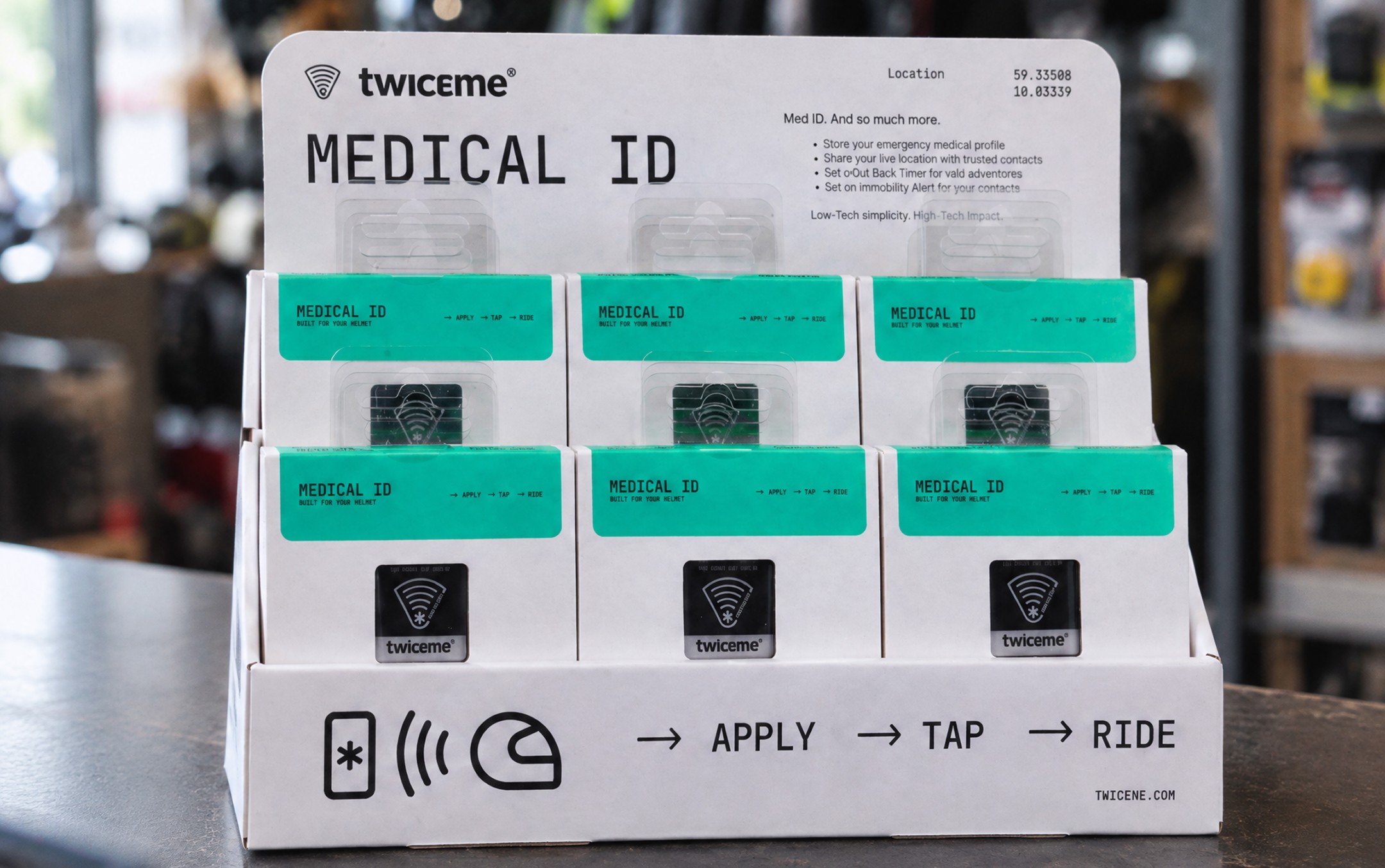
The new Twiceme Tag is a small NFC-equipped badge that can be attached to a motorcycle helmet and used to store important medical and emergency information.
If a rider is involved in an accident and cannot communicate, a first responder can scan the tag with an NFC-enabled smartphone and access information the rider has chosen to make available.
That could include emergency contacts, medications, allergies, medical conditions and other important Medical ID information.
And perhaps the cleverest part is that the system does not require a battery.
What Is the Twiceme Tag?
Twiceme has been developing NFC-based safety technology for several years, with its technology already integrated into selected helmets and other safety equipment.
The new Twiceme Tag takes a slightly different approach.
Instead of requiring riders to buy a helmet with the technology already built in, Twiceme describes the new product as an adhesive NFC badge that can be attached to a motorcycle helmet.
That potentially makes the system accessible to riders who already own their helmet.
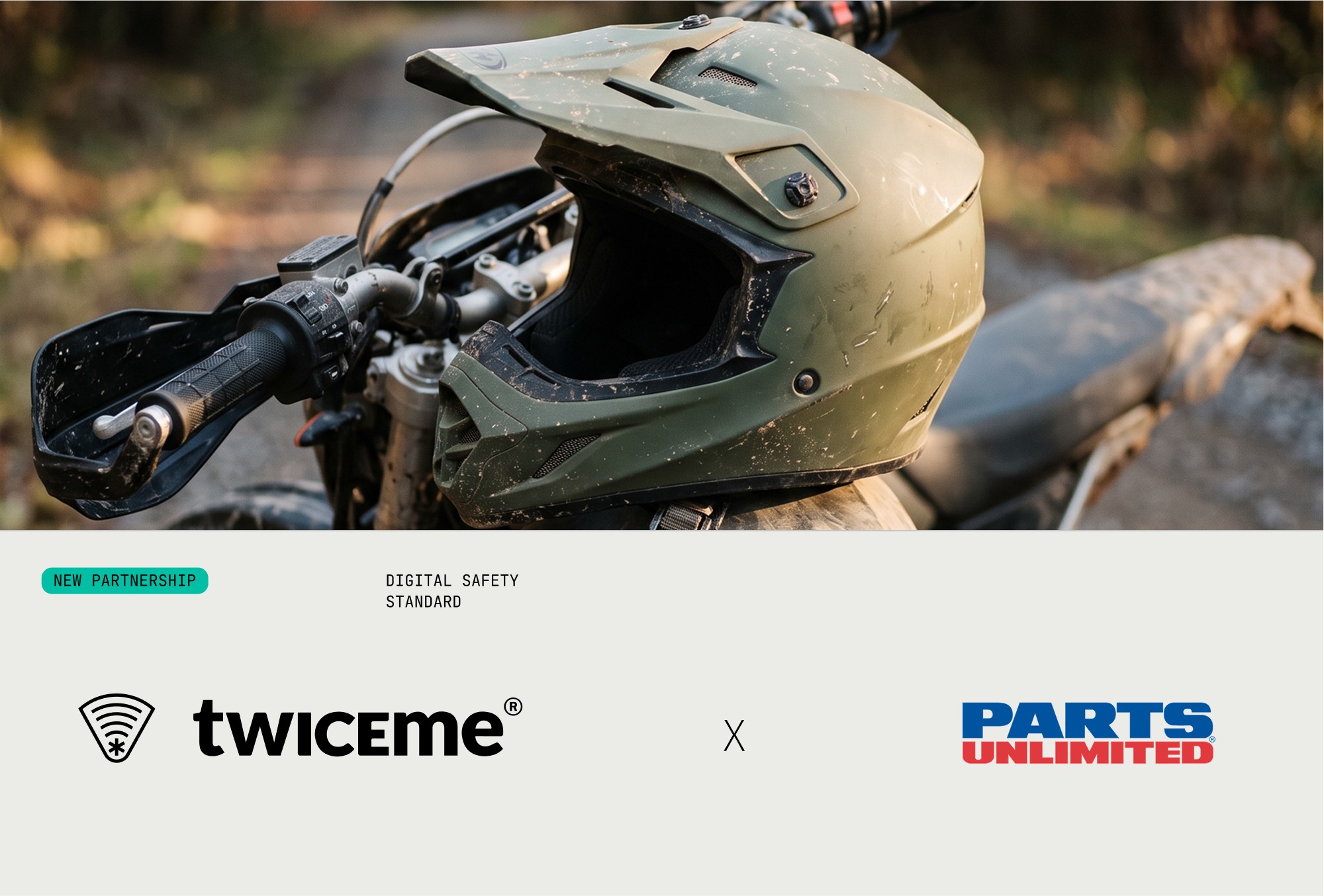
Twiceme announced the Tag alongside a new collaboration with Parts Unlimited, which will distribute the product in the powersports market.
How Does It Work?
NFC stands for Near Field Communication.
It is the same basic type of short-range wireless technology used for things such as contactless payments.
Twiceme’s system uses a small NFC chip that does not require its own battery.
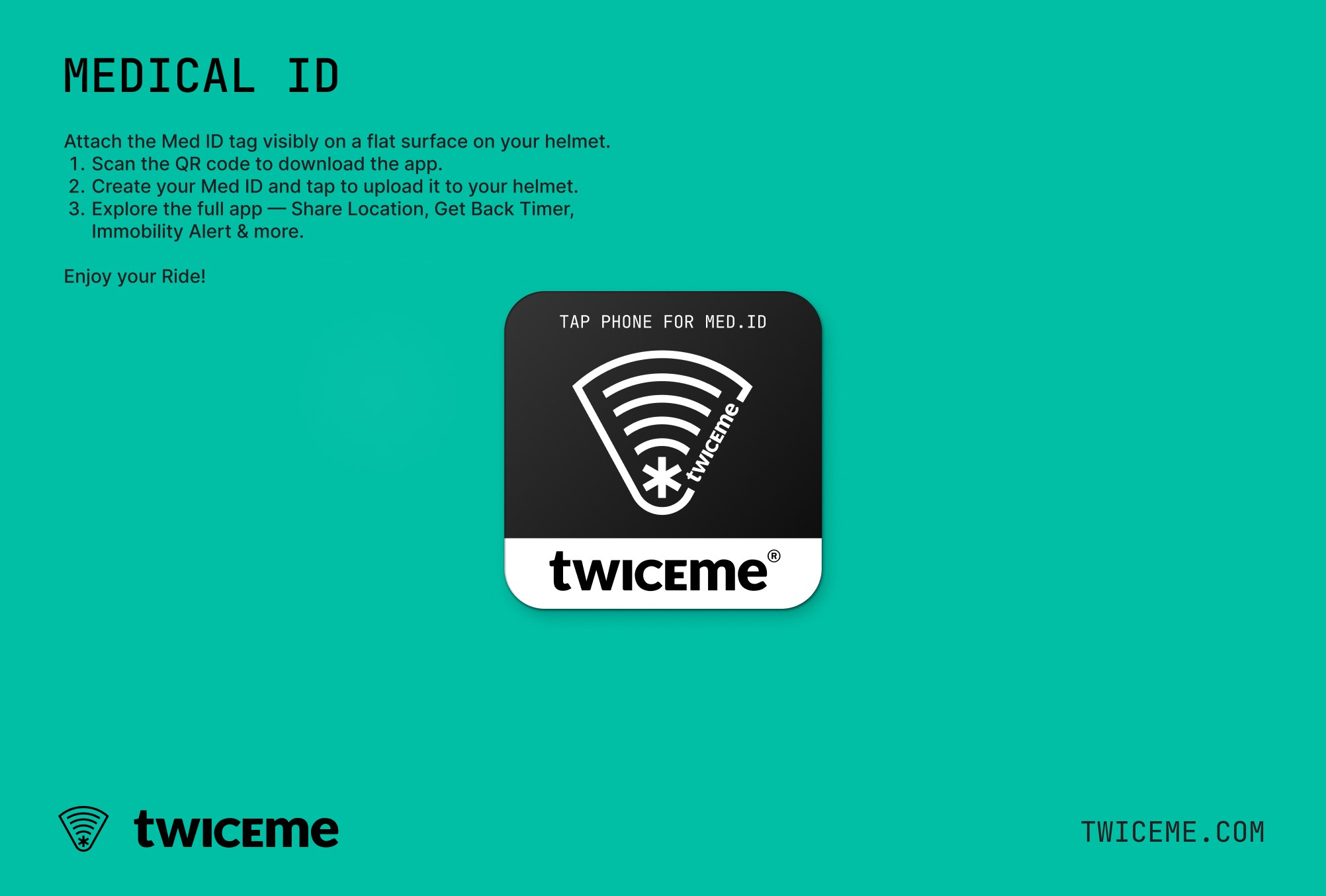
Bring a compatible smartphone close to the Twiceme symbol and the phone can read the information stored on the chip.
According to Twiceme, its NFC hardware normally needs the smartphone to be within roughly 1–3 centimetres of the tag.
There is no Bluetooth pairing and no battery in the tag that needs charging.
For a motorcycle rider, that is important.
The last thing you want from emergency equipment is another electronic device you need to remember to charge before every ride.
Your Medical Information Stays on the Tag
This is one of the more interesting aspects of the system.
Medical information entered into Twiceme’s Medical ID is not stored in a central cloud database.
Instead, Twiceme says that information is stored locally on the NFC chip in the safety equipment itself.
That means your Medical ID is not sitting on Twiceme’s servers waiting for someone to access it.
It also means the information can potentially remain available in areas where mobile connectivity is poor.
For adventure riders, that is particularly interesting.
South Africa has plenty of fantastic riding areas where mobile reception is not guaranteed.
If you have had an accident somewhere remote, a system that does not depend entirely on an internet connection could have a meaningful advantage.
What Information Can You Store?
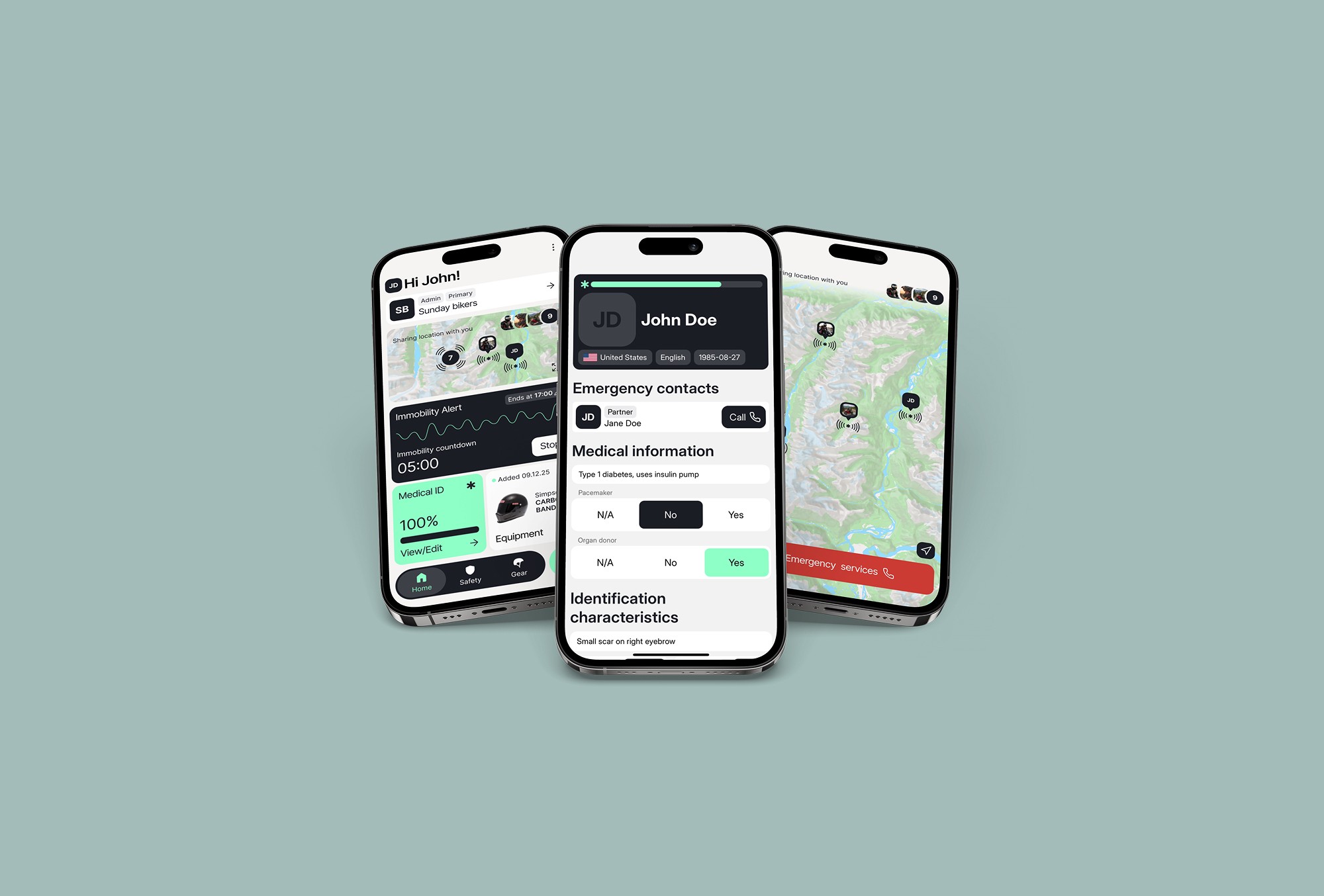
Twiceme’s Medical ID system can provide responders with information including:
- Emergency contacts
- Medications
- Allergies
- Medical conditions
- Blood type
The rider chooses what information to store and make accessible.
That could become particularly useful when the injured rider cannot speak for themselves.
A paramedic arriving at an accident scene might otherwise have no idea whether the rider has an important medical condition, uses medication or has an allergy that could influence treatment.
The Twiceme Tag is designed to make that information accessible directly from something the rider is already wearing: their helmet.
It Is Not Just a Medical ID
The Twiceme ecosystem includes several additional safety functions through its smartphone app.
One of the more interesting is the Get Back Timer.
The idea is simple.
A rider can set an expected return time before heading out. If they do not return or check in as expected, a designated contact can be alerted.
Twiceme also offers features including location sharing and an Immobility Alert.
Those functions could be particularly relevant to adventure and enduro riders who regularly ride alone or travel into remote areas.
The NFC Medical ID, however, remains arguably the most interesting part because it is passive.
The tag does not need to detect an accident.
It does not need to maintain a cellular connection.
And it does not need a charged battery.
Someone simply needs to know that the tag is there and scan it.
There Is One Obvious Limitation
And that is worth discussing.
Technology like this is only useful if emergency responders recognise it.
A paramedic needs to see the Twiceme symbol, understand what it represents and know that it can be scanned.
That means adoption matters.
Twiceme appears to understand this.
The company has been working to establish its system across multiple safety industries rather than simply selling motorcycle accessories.
The technology has already appeared in helmets and other protective equipment, while the company has also partnered with motorcycle organisations.
In the United States, the AMA National Grand Prix Championship announced that riders would be required to equip their helmets with Twiceme technology during the 2026 and 2027 seasons, allowing medical crews to access rider Medical IDs following an incident.
The more common the symbol becomes, the more useful the system potentially becomes.
Could This Make Sense in South Africa?
Potentially, yes.
Motorcycle riders in South Africa regularly travel significant distances, and adventure riding often takes us into areas where emergency response times can be considerably longer than they would be in a city.
Think about riding through the Karoo.
Lesotho.
Namibia.
The Cederberg.
The Lowveld.
Or simply heading out alone on a Sunday morning.
If you are unconscious following an accident, emergency personnel might have very little information about you beyond whatever they can find in your pockets or on your phone.
Having essential medical information attached directly to your helmet is an interesting solution.
But there is an important caveat.
At the time of writing, we have not verified official South African availability, local pricing or widespread adoption of the Twiceme system by South African emergency services.
The newly announced distribution agreement is focused on Parts Unlimited and the powersports market it serves.
So we are not suggesting South African riders rush out and buy one yet.
We would first like to see local availability and understand how familiar South African emergency responders are with the system.
A Simple Idea Might Be the Best Part
Motorcycle technology is becoming incredibly complicated.
Radar.
Adaptive cruise control.
Electronic suspension.
Cornering ABS.
Traction control.
Semi-automatic transmissions.
Smartphone connectivity.
The Twiceme Tag goes in almost the opposite direction.
It is essentially a tiny chip stuck to your helmet.
No charging.
No Bluetooth pairing every time you ride.
No expensive new helmet required.
And potentially no internet connection required to retrieve the Medical ID stored on the equipment.
That is refreshingly simple.
Torque & Throttle Take
This is not the kind of motorcycle technology that is going to make your bike faster or transform the riding experience.
Hopefully you will never need it at all.
But that is also the point.
In an emergency, getting the right information to the right person quickly can matter far more than another riding mode or another five horsepower.
The biggest question is not really whether the technology works.
NFC is already mature technology.
The question is whether systems like Twiceme can become recognisable enough that paramedics, marshals and other first responders instinctively know to look for and scan them.
If that happens, attaching a small NFC tag containing emergency information to a motorcycle helmet could become as normal as carrying an emergency contact on your phone.
For South African riders, we are particularly interested in seeing whether the Twiceme Tag becomes officially available locally.
Because if it does, this is one piece of motorcycle technology we would genuinely like to test.
Not by crashing, obviously.
Just the tag.
