
Kawasaki has revealed the 2027 KLE650, expanding its adventure range with a 649 cc parallel twin, a 21-inch front wheel and a touring package that includes traction control and electronic cruise control.
Available in standard and SE versions, the new motorcycle builds on the direction established by the smaller KLE500. However, Kawasaki is positioning the 650 around long-distance comfort, everyday versatility and the ability to explore beyond tar.
That distinction matters.
The rally-inspired bodywork suggests remote tracks and dusty horizons, but Kawasaki’s announcement repeatedly emphasises touring. This is a motorcycle intended to handle commuting, mountain passes and extended journeys as well as unpaved roads.
For South African riders, that combination could be particularly relevant. The question is whether Kawasaki has found the right balance between highway composure and the manageability needed when the road deteriorates.
A familiar engine foundation with new technology
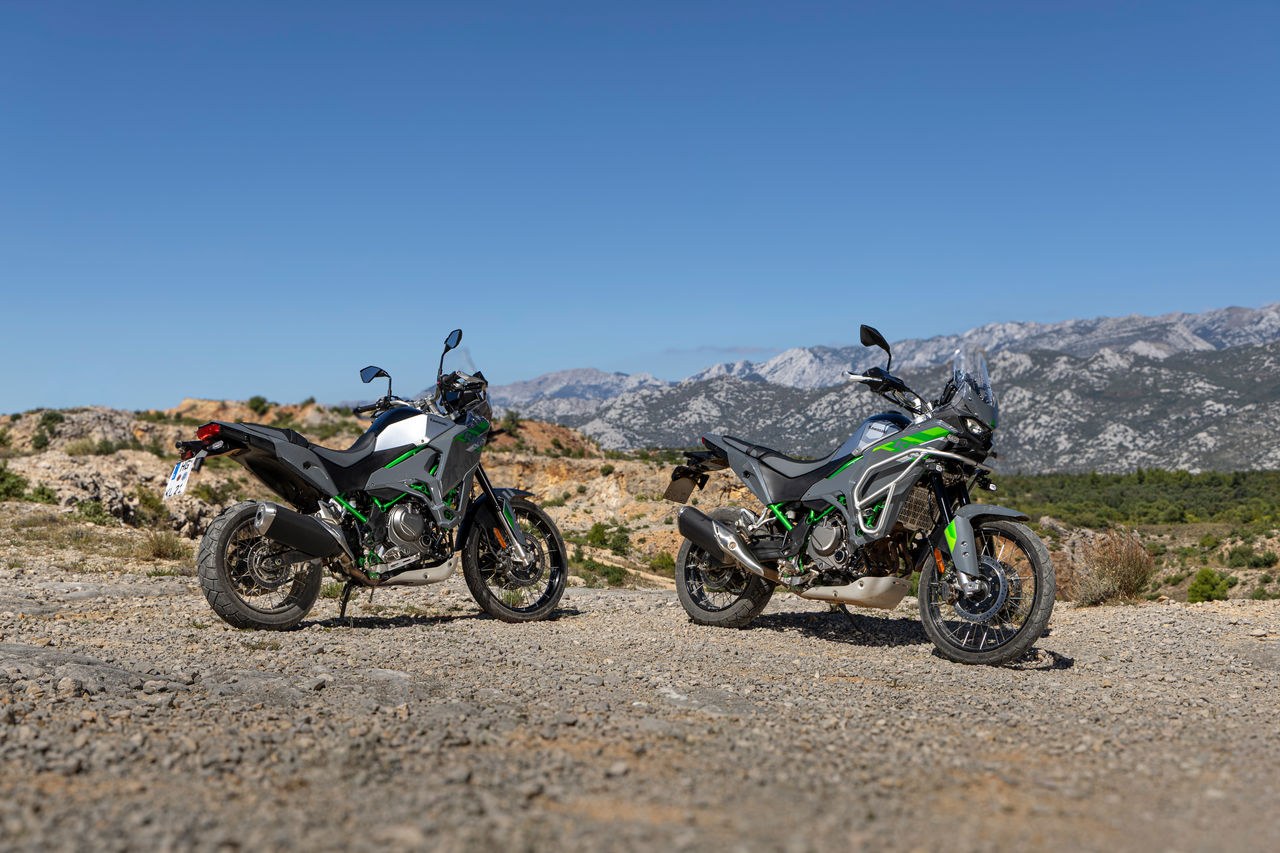
The KLE650 uses Kawasaki’s established 649 cc liquid-cooled parallel-twin architecture, updated with electronic throttle valves and revised intake and exhaust systems.
Kawasaki describes the intended delivery as strong through the lower and middle rev range, with useful performance higher up and a smooth response throughout.
That sounds appropriate for an adventure tourer.
Riding with luggage or a passenger places different demands on an engine from a short solo blast. Accessible response, predictable acceleration and the ability to maintain a comfortable cruising pace can matter more than a dramatic peak-power figure.
Electronic throttle control is also significant because it supports the KLE’s cruise-control system.
We would still want to assess how the engine responds during slow standing manoeuvres, particularly on loose surfaces. An engine can feel beautifully smooth on tar yet require careful clutch work when negotiating rocks or a tight uphill turn.
The final measure will be how well Kawasaki has adapted the familiar twin to this different role.
A 21-inch front wheel with touring priorities
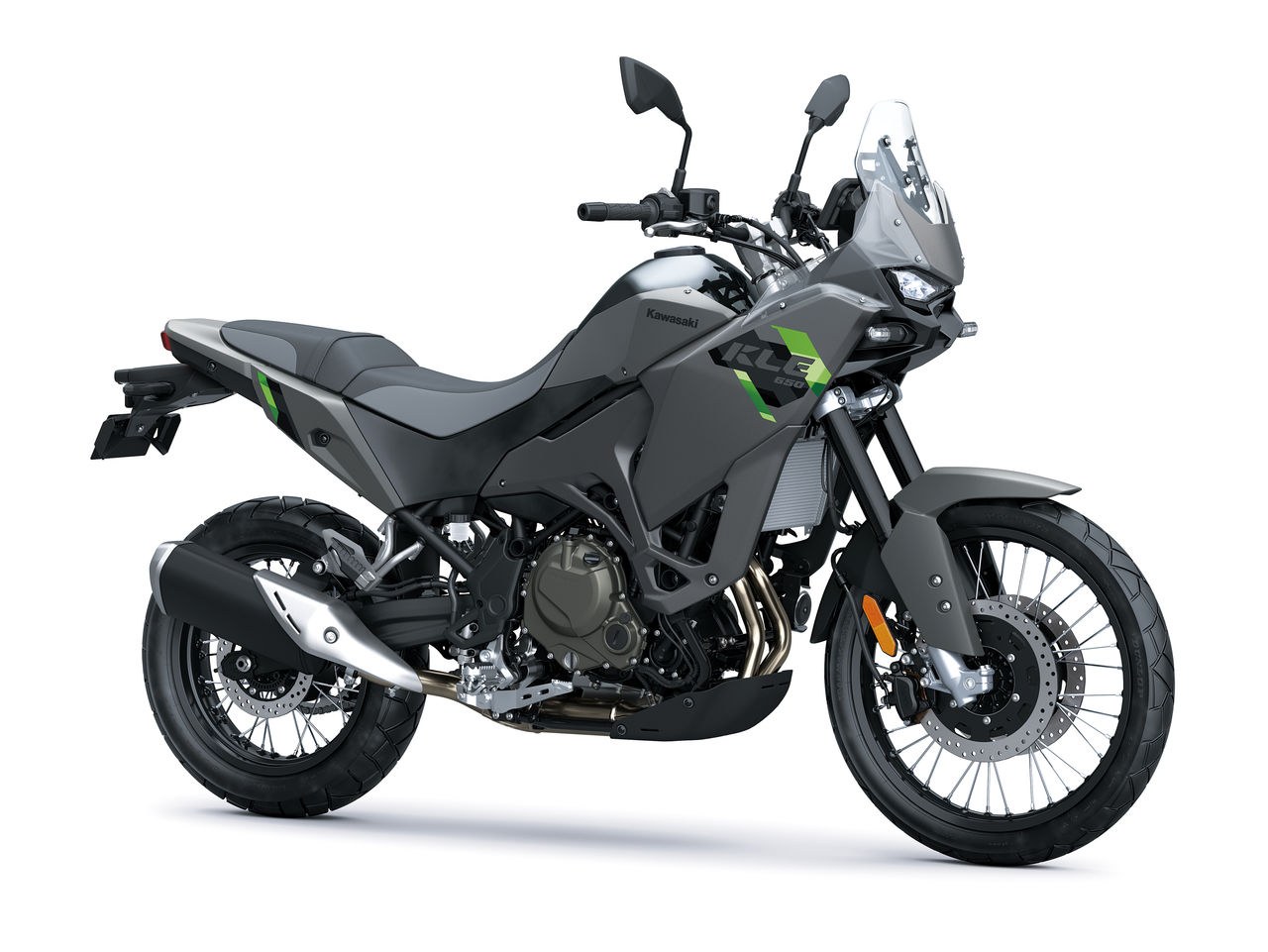
The KLE650 combines a 21-inch front wheel with a 17-inch rear, both using spokes.
Its compact steel trellis chassis draws on the KLE500 concept, while Kawasaki identifies revised dimensions and a new swingarm as part of its work on road comfort and highway stability.
The large front wheel gives the KLE a clear adventure identity, but it should not be treated as proof of exceptional off-road ability.
Wheel size is only part of the equation. Ground clearance, suspension control, weight distribution, tyre choice and the rider’s ability to move around the motorcycle all influence what happens when the route becomes difficult.
For many owners, the ideal result would be a motorcycle that remains relaxed over long tar sections and feels reassuring when the final stretch to a campsite or lodge becomes gravel.
That is a different brief from building a lightweight trail motorcycle, and Kawasaki appears comfortable acknowledging it.
Long-travel KYB suspension
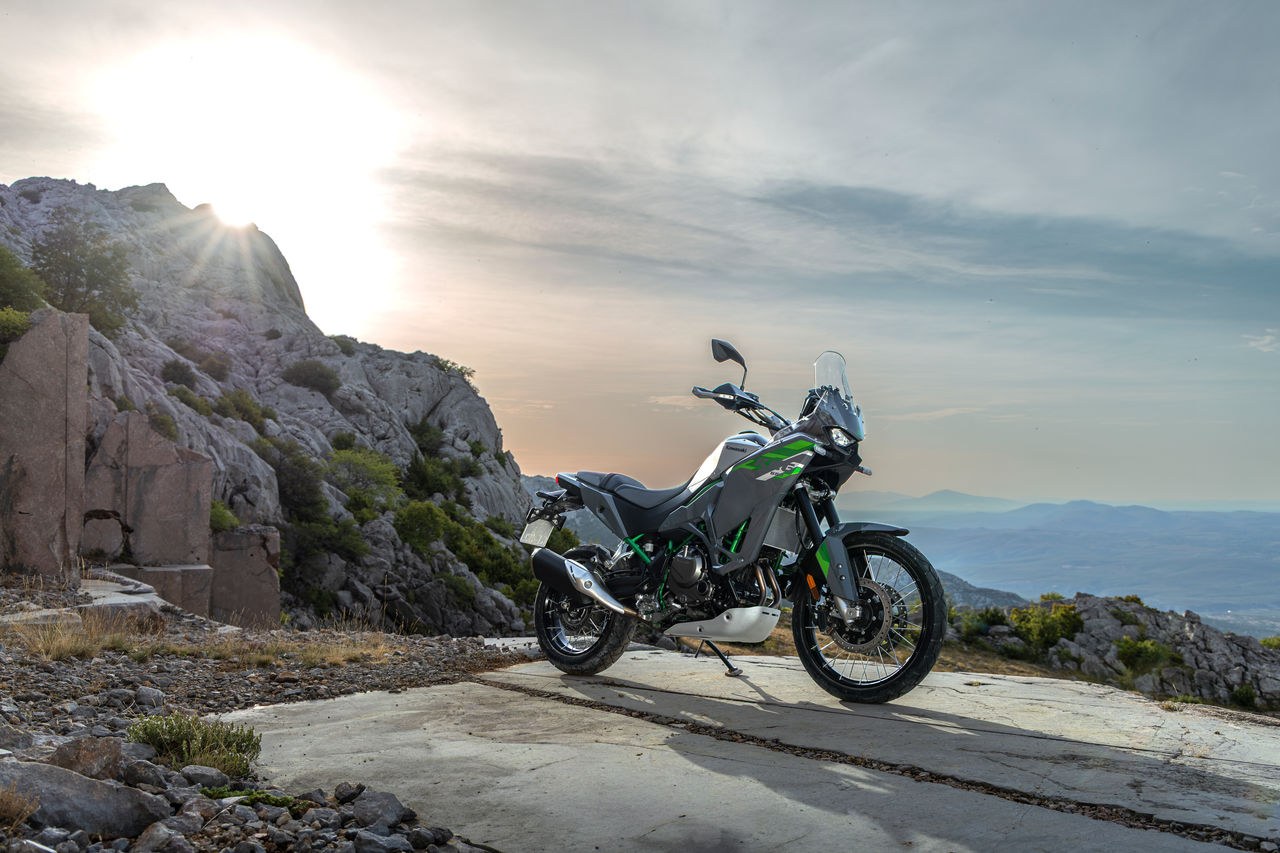
Kawasaki lists a KYB cartridge-type upside-down fork and a New Uni-Trak rear suspension arrangement, with 210 mm of front wheel travel and 196 mm at the rear.
The SE also receives a riding position and bodywork designed to allow movement while standing.
Those are useful foundations for mixed-surface riding.
However, suspension travel tells us how far the wheels can move, rather than how well the motorcycle manages that movement. Spring rates, damping and load capacity will determine whether it feels controlled with a rider, passenger and luggage aboard.
On South African gravel, the important test will include corrugations, potholes and unexpected washouts. A setup that feels comfortable during gentle riding must also retain enough control when several impacts arrive in quick succession.
We will reserve judgement until we can test the motorcycle under those conditions.
Proper brakes and selectable ABS
Kawasaki’s US specification lists twin 300 mm front discs with two-piston calipers, supported by a 230 mm rear disc.
The same specification identifies a 43 mm KYB front fork, a six-speed transmission and chain final drive. Final local specifications will need confirmation.
Kawasaki also confirms selectable ABS. Its European explanation notes that operation varies by model and market, with some versions allowing only the rear ABS to be disabled. The system returns to its default enabled setting after restarting.
That market qualification is worth retaining.
Riders planning regular off-road use should establish exactly what their motorcycle permits, how easily the setting can be changed and what happens after stopping the engine.
Clear, accessible controls can make a considerable difference during a day that repeatedly switches between tar and gravel.
Cruise control strengthens the touring argument
Both versions receive Kawasaki Traction Control and electronic cruise control as standard in the UK announcement.
Cruise control could be one of the KLE650’s strongest practical attractions.
A South African adventure weekend can begin with a substantial highway journey before the interesting riding starts. Reducing the need to hold a constant throttle can make those transport sections less tiring.
Traction control adds another useful tool for changing grip conditions, although its value will depend on how progressively it intervenes.
The key question is whether the electronics support the motorcycle’s broad purpose without making routine adjustments unnecessarily complicated.
We would rather have a small number of effective, understandable functions than an extensive menu that distracts from riding.
What does the SE add?
The SE receives a more comprehensive package, including an up/down Kawasaki Quick Shifter, colour TFT instrumentation, tubeless tyres, a larger windscreen, handguards and an aluminium bash plate. Kawasaki’s UK announcement also lists a USB-C power socket.
Its five-inch TFT supports smartphone connectivity and turn-by-turn navigation display.
For riders travelling regularly, tubeless wheels may be a particularly persuasive upgrade. Suitable tread punctures can often be repaired without removing the wheel, although sidewall damage and more serious failures require different solutions.
The quickshifter is a convenience feature rather than an automatic transmission. Kawasaki describes clutchless changes in both directions and lists the system as an accessory possibility for the standard model on its European SE page.
Whether the SE represents better value will depend on how much of its equipment an owner would otherwise add.
Comfort and luggage matter as much as styling
Kawasaki’s approach includes an adjustable windscreen and alternative seating combinations, allowing owners to prioritise road comfort or greater freedom of movement.
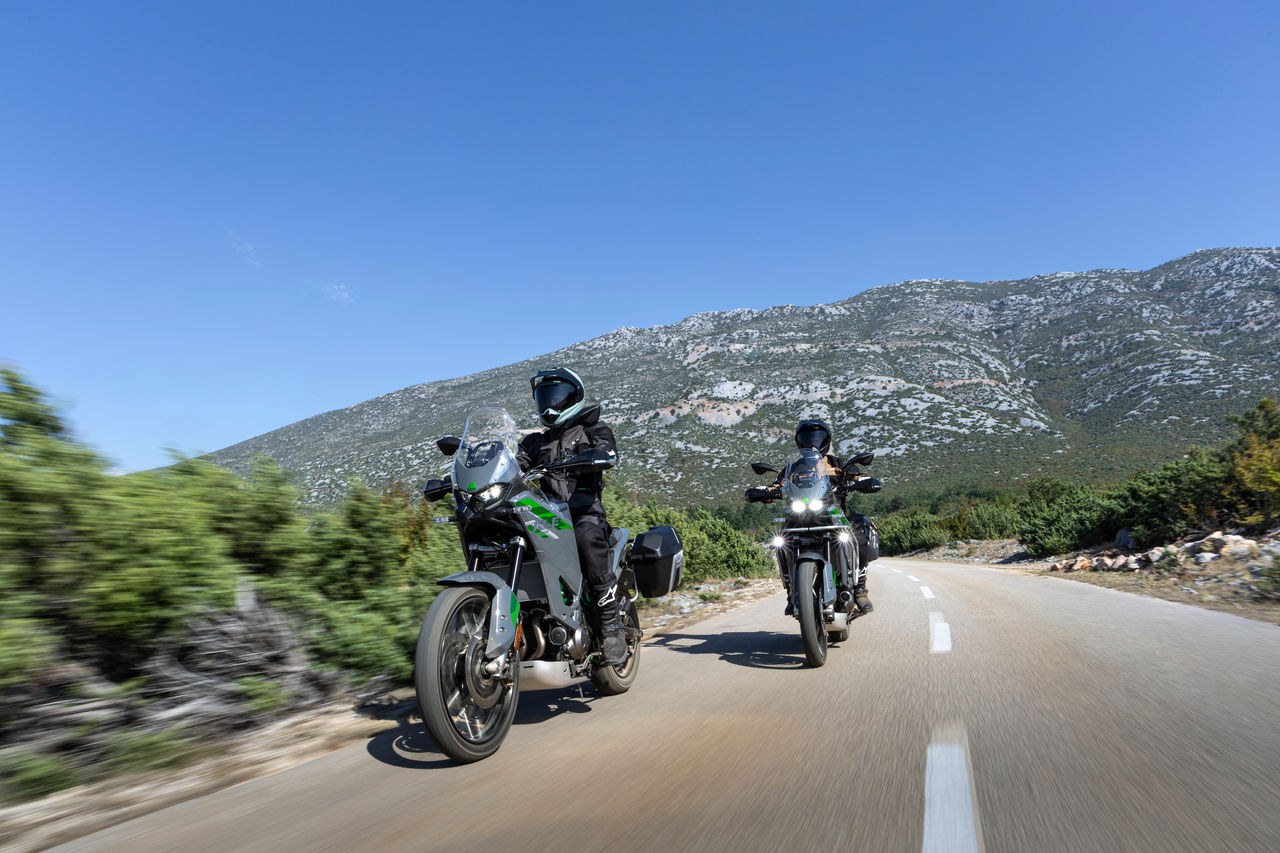
The SE can also carry two panniers and a top box using genuine accessories.
That versatility suits the motorcycle’s intended role.
A comfortable seat and effective wind protection can determine whether an adventure tourer remains enjoyable after several hundred kilometres. Standing ergonomics matter just as much when the final hour takes place on rough gravel.
Luggage also changes the experience. Capacity is useful, but loaded handling, mounting security and the space available to the passenger deserve proper examination.
The rally appearance may attract attention in the showroom. These less glamorous details will determine how well the KLE works on a real trip.
Weight and ground clearance remain key questions
We have not verified final weight and ground-clearance figures for both versions from a complete, consistent official specification.
The official US standard-model page retrieved for this article still lists those measurements as TBA.
We will therefore avoid presenting provisional figures as settled specifications.
Ground clearance is especially important for the Adventure Report angle. Long suspension travel and a large front wheel do not guarantee sufficient space beneath the engine when crossing rocks or deep ruts.
Weight will also influence how approachable the motorcycle feels when manoeuvring, recovering from a mistake or lifting it after a fall.
Those figures deserve attention before anyone calls the KLE650 a serious technical-trail contender.
UK pricing and South African availability
Kawasaki has announced UK prices of £7,499 for the standard KLE650 and £8,899 for the SE, with arrivals from April 2027.
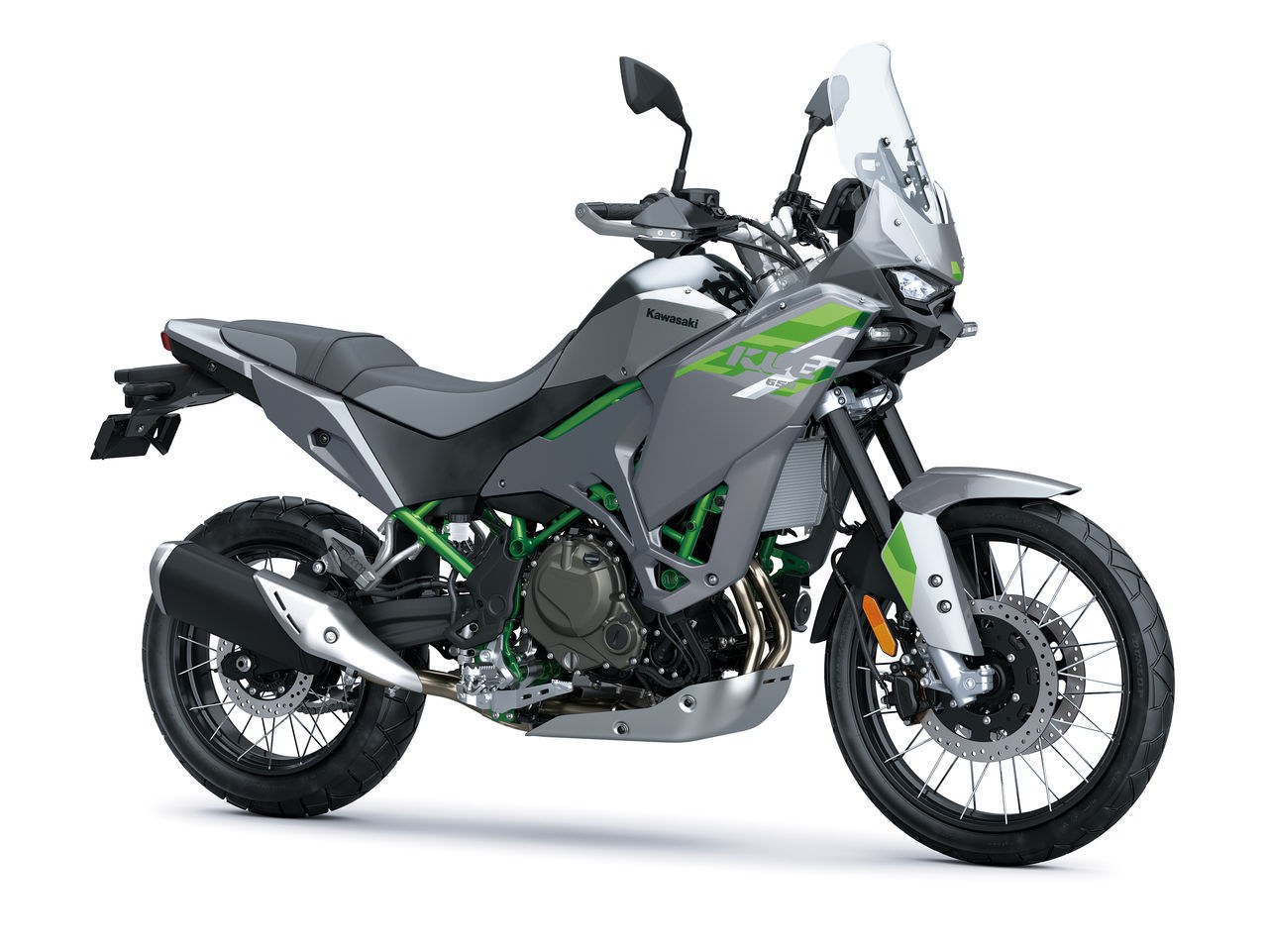
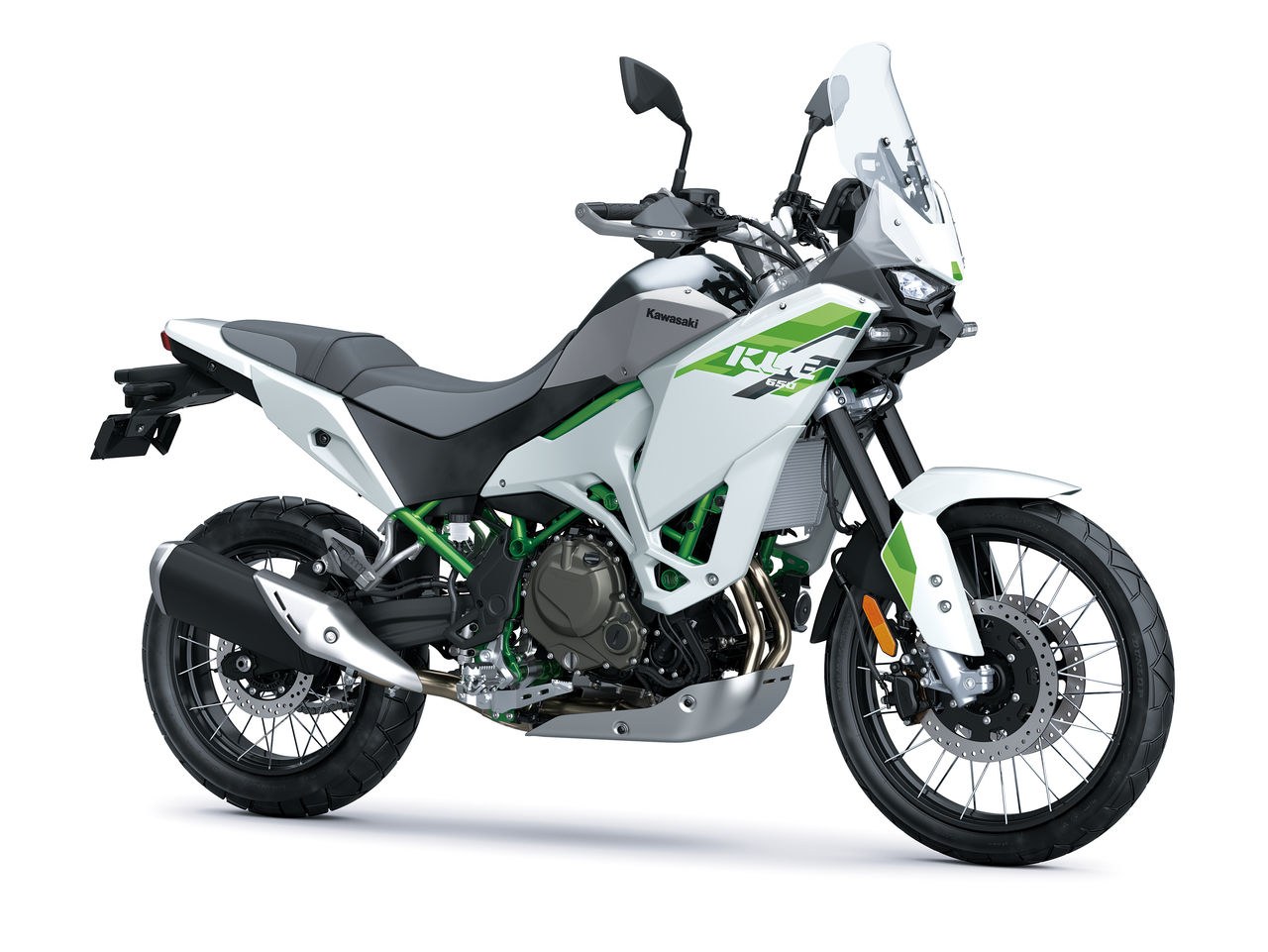
The standard UK model is listed in Metallic Matte Graphensteel Gray, while the SE offers Pearl Storm Gray or Pearl Blizzard White. Accessory-based Top Case, Rally and Adventure Tourer editions are also planned.
South African pricing, availability and local equipment have not been verified for this article.
A direct currency conversion would not establish a local retail price. The eventual South African package will need to be assessed on its own terms.
Torque & Throttle Take
The KLE650 has a convincing purpose: provide enough engine and comfort for substantial touring, while retaining the equipment and layout needed to explore unpaved roads.
Cruise control strengthens that argument, and the SE’s tubeless wheels and additional protection could make it the more attractive travelling companion.
But the unanswered questions are important.
We still need a clear picture of weight, ground clearance and loaded suspension behaviour before judging how far beyond maintained gravel the motorcycle comfortably belongs.
For now, Kawasaki has revealed a promising adventure tourer. Whether it becomes an equally convincing adventure explorer will be decided on the road—and after the road ends.
Sources
- Kawasaki UK — Official KLE650 launch announcement, 27 October 2026
- Kawasaki Europe — 2027 KLE650
- Kawasaki Europe — 2027 KLE650 SE
- Kawasaki USA — 2027 KLE650 ABS specifications
- Kawasaki USA — KLE650 model range
