

In the 1980s, apparently you needed at least one of three things to join the cool club: a moustache, aviator sunglasses or a motorcycle.
I managed two out of three for this Garage Report.
The motorcycle is a rather special one: a 1980 Honda CX500, known in certain circles by one of the strangest and least flattering nicknames ever attached to a bike:
The Plastic Maggot.
That hardly sounds like one of Honda’s engineering gems. Spend some time around a CX500, though, especially an original example like this one, and you quickly realise there is much more to it than the nickname suggests.
More than four decades after it left Honda’s factory, I finally had the opportunity to ride one. And I am very glad nobody turned this one into a café racer.

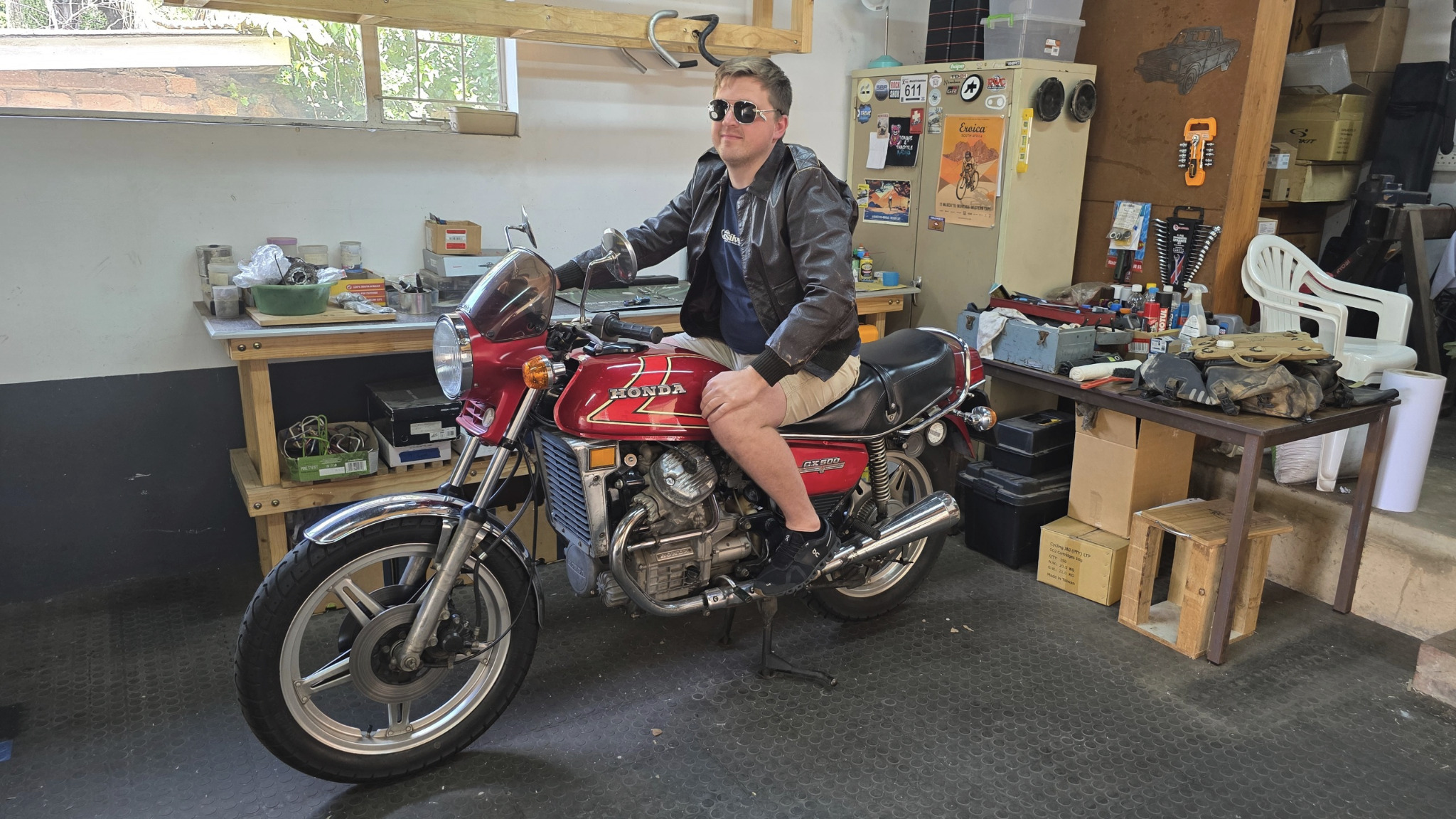
First things first: this CX500 is original
That is what I appreciated most before I had even ridden it. It is still unmistakably a CX500.
Anyone who follows classic motorcycles will understand why that matters. CX500s became extremely popular café-racer donors. Seats were chopped, frames shortened, handlebars changed and bodywork discarded. Some of the finished machines look fantastic, but original bikes have become increasingly difficult to find.
The owner of this example has kept it remarkably close to Honda’s original vision. You can stand back and see what buyers saw in 1980 — and what an unusual thing it is.
Honda certainly wasn’t playing it safe
At its heart is a 497 cc, 80-degree liquid-cooled V-twin with four valves per cylinder.
Honda rotated the cylinder heads, allowing the intake arrangement to sit neatly between the cylinders while the exhausts exited outward. That distinctive layout became known as the “twisted twin.”
It is wonderfully weird, particularly when you remember this motorcycle was developed in the late 1970s. Liquid cooling and this level of mechanical complexity were not common on middleweight road bikes.
Some mechanics took one look and effectively said: “No, thank you.”
Too complicated — until it proved everyone wrong
The CX500’s unusual engineering initially counted against it. It was different, complicated and unfamiliar to many workshops.
Time proved Honda knew what it was doing.
The engines gained a reputation for exceptional durability, and the CX500 became popular with commuters and motorcycle couriers. That is a hard life: traffic, bad weather, constant starts and stops, long distances and very little sympathy.
Yet CX500s regularly covered enormous mileages with routine maintenance. That toughness is a major reason surviving examples are still being ridden today.

So, why “Plastic Maggot”?
Yes, we have to discuss the name.
The nickname grew out of the British motorcycle scene, where the CX500’s styling was not universally celebrated. Its bulky bodywork and unusual mechanical layout looked complicated beside the simpler motorcycles of the period.
I can understand the criticism, but that awkwardness has become part of its charm. Put it next to a modern naked bike and it looks like it arrived from another universe.
I like that. The CX500 makes absolutely no attempt to hide when it was designed.
What is it actually like to ride?
This was the part I wanted to understand.
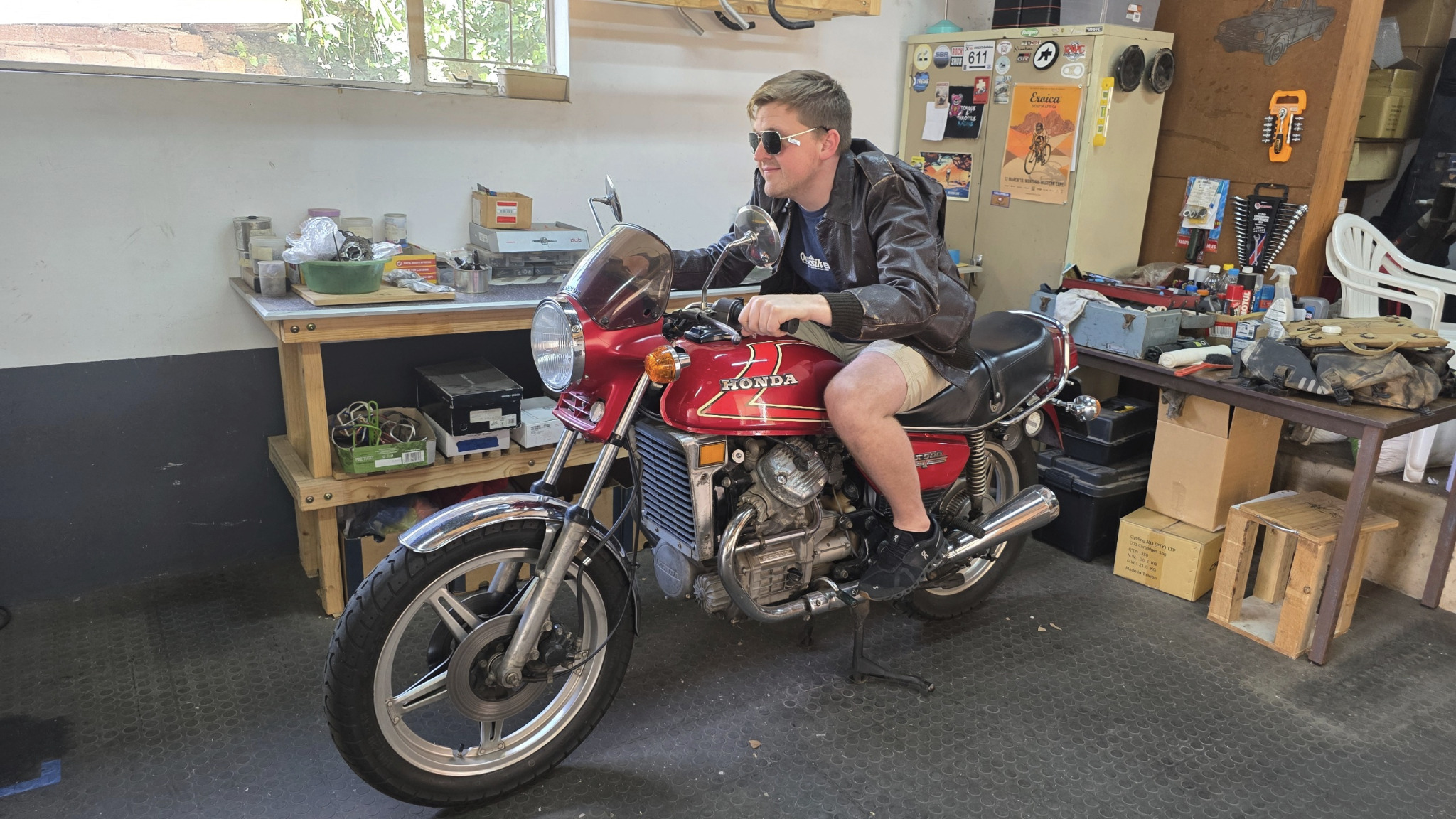
The first thing I discovered is that you need to use the revs.
Low down, the CX500 does not exactly threaten to pull your arms from their sockets. It can feel a little underpowered. Let the V-twin climb through the rev range, however, and it wakes up.
You have to work it, change gears and keep the engine spinning. Or, as I said in the video, you have to ride it like you stole it.
I will not pretend this 46-year-old example still has every horse it left the factory with. A few may have escaped from the stable over the years. That does not matter. The enjoyment comes from making the engine work and experiencing the motorcycle on its own terms.
About 50 horsepower was plenty
When new, the CX500 produced approximately 50 horsepower and 46 Nm of torque.
Those figures look modest in 2026, when middleweight bikes make dramatically more power while weighing less. But judging a 1980 motorcycle by a modern specification sheet misses the point.
For its day, the CX500 was a respectable performer. More importantly, you can actually use its engine. Instead of arriving at ridiculous speed after one careless handful of throttle, you work through the five-speed gearbox and enjoy the mechanical interaction.
There is real satisfaction in that.
Shaft drive made it a working motorcycle
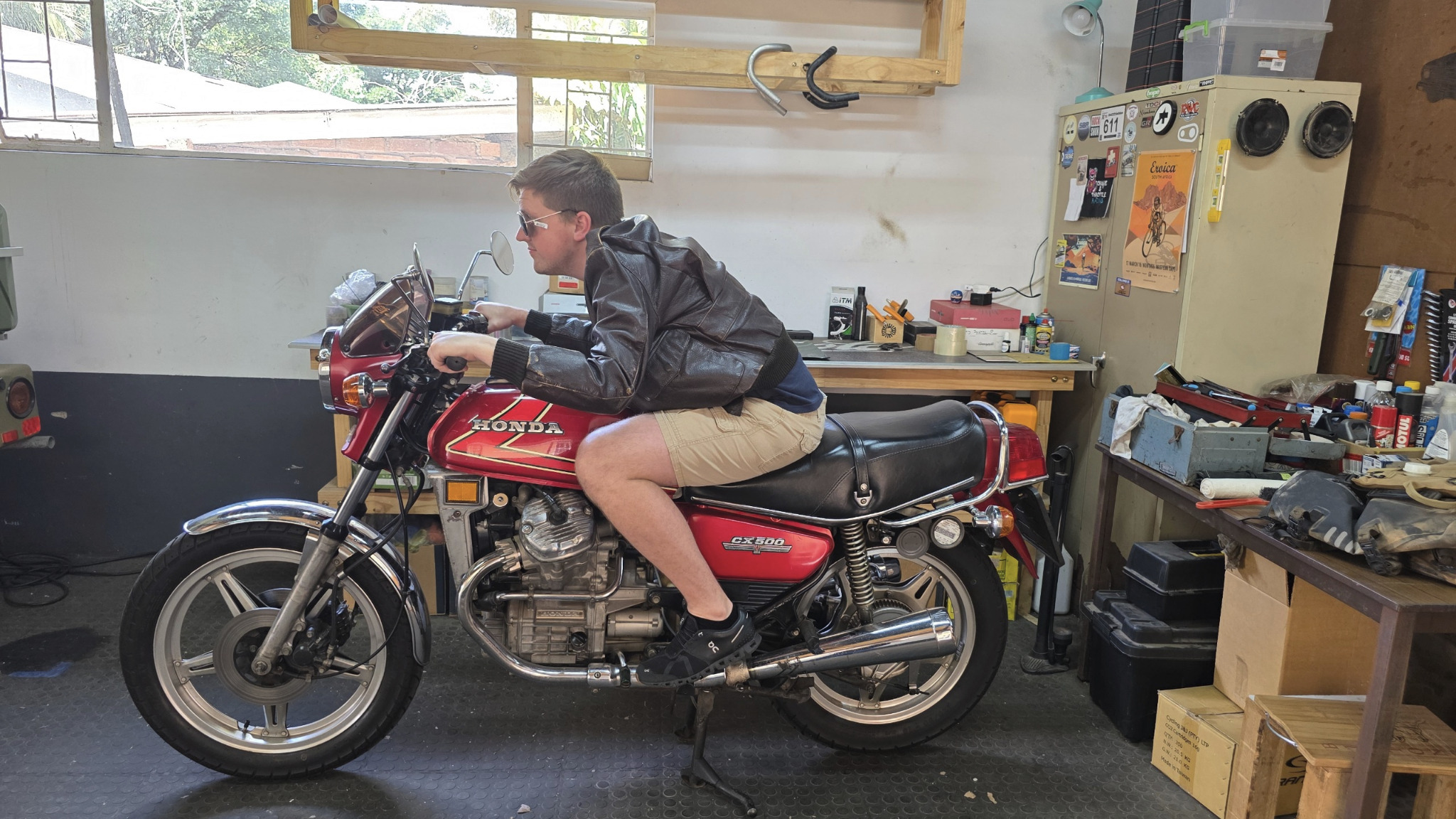
The shaft final drive is one of my favourite parts of the package.
It means no chain lubrication, less regular adjustment and less mess. For a commuter or courier spending every day on a motorcycle, those are meaningful benefits.
Combine the shaft with the famously durable V-twin and you understand why so many working riders trusted the CX500. It may have looked strange, but it was designed to get on with the job.
She’s a heavy old girl
The CX500’s dry weight is approximately 205 kg, depending on specification. Add fluids and fill the roughly 17-litre fuel tank, and that is substantial for a 500.
You feel that weight, just as you feel the age of the braking and suspension technology. This bike has twin front discs, but nobody will mistake them for a modern radial-brake setup.
You adjust your riding accordingly. The CX500 does not disguise its age, and I would not want it to.
Why café-racer builders love them
The attraction is easy to understand. The transverse V-twin is visually interesting, the shaft drive keeps the rear tidy and the basic silhouette responds well to stripped-back bodywork.
CX500s were also once common and inexpensive, making them ideal donor bikes.
The irony is that all those conversions have made an original example special. Twenty years ago, cutting one up may not have felt significant. Today, I would leave this one completely alone.
Sometimes original is better
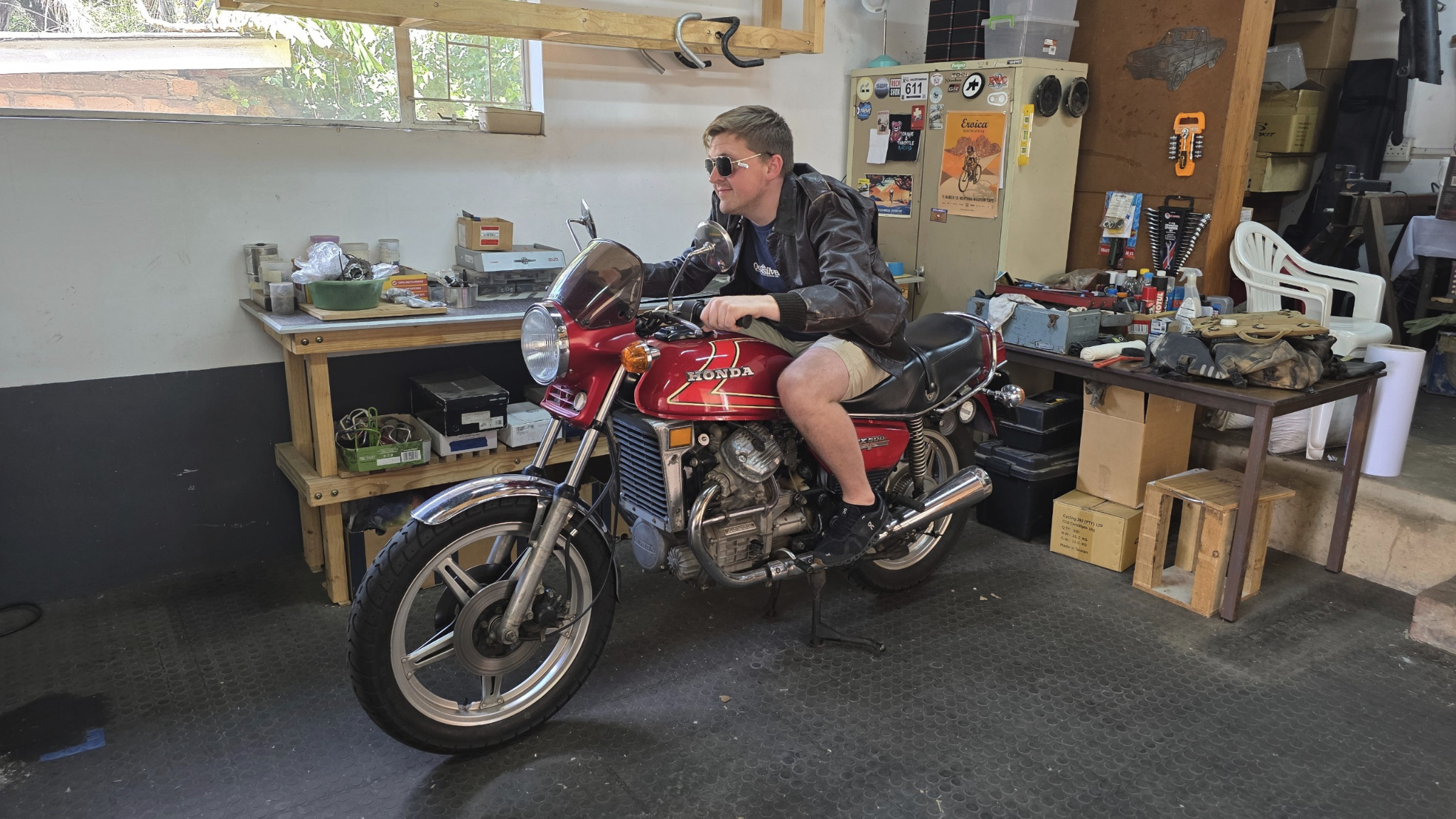
The broad seat, chrome, analogue instruments, peculiar engine layout and period riding position all belong together.
If I wanted something lighter, faster, better suspended and harder braking, hundreds of modern motorcycles could do the job. That is not why you ride a CX500.
You ride it because it is a CX500.
I do not want a 46-year-old motorcycle to feel like a 2026 model. I want it to show me what riding was like when it was new, and this bike does exactly that.
The Plastic Maggot got the last laugh
This is a motorcycle people mocked. Some thought it ugly, others thought it unnecessarily complicated, and plenty of mechanics would rather have worked on something familiar.
Yet more than four decades later, we are still talking about it, riding it, restoring it and — increasingly — preserving good original examples.
The motorcycle that was supposedly too strange simply refused to disappear.
It is not perfect. It is certainly not fast by modern standards. It is heavy, weird and full of character.
And I absolutely love that about it.
The Plastic Maggot has become a cult classic — and I reckon it deserves to be.
1980 Honda CX500 — Quick Specs
Engine: 80-degree liquid-cooled V-twin
Capacity: 497 cc
Valvetrain: Four valves per cylinder
Power: Approximately 50 hp
Torque: Approximately 46 Nm
Transmission: 5-speed
Final drive: Shaft
Front brakes: Twin discs
Fuel capacity: Approximately 17 litres
Dry weight: Approximately 205 kg
Watch my full Garage Report above to see the CX500 up close and hear what it is like to ride this wonderfully strange piece of Honda history.
And I want to know: would you keep it original or turn it into a café racer?
– Ben Viljoen
Torque & Throttle Motorcycle Co
